Gowns are beautiful outfits that not only deserve a place in a woman’s wardrobe but also make a perfect space in your kid’s closet. Crafted with attractive designs and soft fabrics, gowns for girls offer the freedom to move and play while exuding grace. These outfit pieces are synonymous with the premium looks and comfort the designers promise to deliver. From ballerina-inspired Western gowns with floral details to elegantly designed Indian gowns with embroidery and embellishments, choosing the perfect pick that resonates with your little one’s personality and joyful energy can be a daunting task.
Whether you are looking for a birthday dress or preparing your girl for a party, these creations are versatile enough to complement various occasions and different settings. Kid’s gowns offer a unique blend of fashion and style without compromising on comfort. With the varied types and patterns available, let’s take a look at some of the popular options that your little one must own.
Birthday Gowns
One-shoulder styles or ball-gown looks, you choose the one that attracts your kid and makes her look and feel the best. Whether it be a layered design or a ruffled detailing one, these outfits add a playful and whimsical touch to your little kid’s look. The cascading pattern gives a fun and stylish edge to the overall appearance.
Princess Gowns
Every girl child dream of being a princess in her childhood, and these styles are perfect to make you look like one. Featuring tulle, cascading layers, and other design patterns, these effortlessly provide a charming appeal.
Traditional Gowns
Crafted with attention to minute details and vibrant colorful fabrics, the collection of Indian gowns is vast. Whether you are taking your little one out for a puja, styling her up for a wedding function or choosing the dazzling outfit for festive celebrations, this type of style makes an apt fit fr your traditional closet.
Western Gowns
Whether your girl love prints, or you want to make her look like a cute little diva in an embellished ball gown, there are numerous choices for you to select from. The designers craft these timeless pieces to make your kid not only look beautiful but also stay comfortable wherever she goes.
These are only a few types to mention out of many, however you can select for your favorite one that goes well with the occasion’s setting, your girl’s mood, and style.
In the world of kid’s fashions, gowns are a popular choice to attract all the attention. These are not just pretty dresses but rather are a way to feel the love of joy and endless twirls. Whether it’s a special occasion or just a fun dress-up day, the gowns bring smiles to little faces and make happy memories. So, wait no longer and make everyone fall for your awe-worthy looks.
Gone are the days when the simplistic ‘carrot and stick’ approach was enough to motivate individuals. Today’s world demands a more nuanced understanding of motivation. The loss of inspiration and life’s purpose can lead individuals into the depths of inferiority complex and psychological challenges. Central to achieving success is the preservation of motivation, a crucial element that acts as a driving force, keeping individuals connected to the vibrant aspects of life. However, the journey is not without its hurdles. Constant pressure, failures, and high expectations can impede daily activities, leading individuals to a state where they feel compelled to sacrifice their motivation.
The Impact of Lack of Motivation
Motivation
This lack of motivation can severely destabilize personal growth. For instance, a student facing continuous failures might lose touch with their motivational drive, adversely affecting their future prospects and leading them to believe in their own incapacity for progress. Conversely, if the student maintains their motivational levels and channels them into future endeavors, they can avoid being labeled a failure in life.
Motivation Beyond Academia and Careers
Motivation’s role extends beyond academic and professional spheres; it is equally crucial in domestic and personal relationships. A motivated individual often becomes a pillar of successful relationships, their high spirits enabling them to remain resilient even in life’s low phases. Such individuals can inspire those around them, creating a ripple effect of positive energy.
Strategies to Stay Motivated
The challenge, however, lies in how one can maintain motivation, especially in an era plagued by increasing depression and psychological issues. The nature of motivation varies; for students, it may be kindled by appreciation or better grades, while for employees, it could stem from recognition or new responsibilities. In familial settings, motivation often manifests through the happiness of loved ones.
Identifying and Utilizing Motivational Tools
The most significant challenge is recognizing the appropriate motivational tool. Only by accurately identifying the means of motivation can one assist others in acquiring it, thereby fostering their growth and success in life.
FAQ for Modern Motivation:
What is the ‘carrot and stick’ method and why is it outdated?
The ‘carrot and stick’ method refers to a motivational strategy using rewards (the carrot) and punishments (the stick). This approach is considered outdated because it oversimplifies human motivation and doesn’t account for the complex psychological factors that drive behavior in modern times.
How does a lack of motivation affect an individual’s life?
A lack of motivation can lead to psychological challenges, such as an inferiority complex, and hinder personal and professional growth. It can result in a negative self-perception and limit an individual’s ability to achieve success in various aspects of life.
Can motivation impact relationships? How?
Yes, motivation plays a crucial role in personal relationships. A motivated individual tends to bring positivity and resilience into relationships, helping them to thrive even during challenging times.
What are some common sources of motivation for students and employees?
For students, motivation often comes from appreciation, academic achievements, and improved grades. For employees, recognition, career advancement, and challenging responsibilities can be significant motivators.
Is motivation equally important in family and personal life?
Yes, motivation is just as important in personal and family life as it is in professional and academic settings. In family life, motivation can manifest as the drive to create a happy and supportive environment for loved ones.
How can one stay motivated in the face of depression and psychological difficulties?
Staying motivated amidst psychological challenges involves recognizing personal triggers, seeking support, setting achievable goals, and focusing on self-care. It’s also important to celebrate small victories and maintain a positive outlook.
What are some effective ways to identify what motivates someone?
Effective ways to identify what motivates someone include observing their responses to different situations, asking direct questions about their interests and goals, and paying attention to what activities energize them.
How can motivation be used to improve one’s quality of life?
Motivation can be channeled into setting and achieving personal goals, improving one’s skills, fostering positive relationships, and pursuing activities that bring joy and satisfaction, thereby enhancing overall quality of life.
Can motivation be taught or is it an innate quality?
While some aspects of motivation might be innate, it can certainly be nurtured and developed through positive reinforcement, exposure to inspiring situations, and learning self-motivation techniques.
What role does self-motivation play in personal success?
Self-motivation is crucial for personal success as it drives individuals to set goals, overcome obstacles, and persist in the face of challenges without relying solely on external validation or rewards.
Team of diverse business people clench fists winning tender, sitting at desk with laptop and graphs
The Paradox of Success “What a powerful quote by someone – ‘Success, the thing that fails the most!’ It is rightly observed that when we become most successful, we also become the most vulnerable. Success often brings with it a host of pitfalls like inefficiency, pride, and defensiveness. In our self-admiration, we sometimes lose sight of humility and disconnect from the rest of the world. While this doesn’t happen to everyone, many of us, upon achieving success, become too self-satisfied and idle, taking everything for granted and fiercely guarding our achievements. This resistance to change and new risks can be our downfall.”
Arrogance in Attitudeafter Success
Confident businesswoman and businessman outside office building
Arrogance in Attitude “Understand the following three character traits we often fall victim to, which guarantees our success turning into failures:
Arrogance in Attitude: As success grows, so does a belief that this state will be perpetual. This bias blinds us to our past struggles and the balance of good and bad experiences. In business, this might manifest as underestimating competitors and viewing customers merely as revenue sources, not as individuals. Such arrogance slowly but surely pulls an individual down.
The Trap of Defensiveness
Nature of Defensiveness: With success, a defensive mindset can develop. There’s a false belief that no one else is competent or capable of surpassing us. This attitude breeds sensitivity to criticism and a tendency to respond rudely to feedback. This defensiveness is detrimental to personal and professional growth.
The Danger of Complacency
Being Always Secured in Our Own Shells: Success can lead to possessiveness and an overemphasis on personal security, distancing ourselves from challenges and struggles. This sense of safety breeds laziness, diminishing our willingness to experiment and explore. Life, however, is dynamic and ever-changing; clinging to the status quo is a recipe for stagnation.
Losing Sight of Continuous Improvement
Business Success
A significant risk with success is the loss of the drive for continuous improvement. The hunger and drive that fuelled the initial journey to success may diminish, leading to a plateau in skills and knowledge. Continuous learning and self-improvement are critical to staying relevant and successful in an ever-evolving world.
Conclusion:
Embracing Humility and Responsibility To avoid these pitfalls, one must consciously avoid developing these characteristics. Remember, the more successful you become, the more humility you should exhibit. Being responsible means maintaining that responsibility throughout your journey. Ceasing to engage in the practices that brought you success is akin to stopping your climb upwards, leading to a rapid descent to the bottom.
Frequently Asked Questions (FAQs)
Q: Why does success often lead to arrogance?
A: Success can sometimes create a false sense of invincibility or superiority. This can lead to arrogance, where individuals believe they will always remain successful and start to overlook their past struggles and the contributions of others.
Q: How can defensiveness be harmful to successful individuals?
A: Defensiveness can hinder growth and learning. Successful individuals who are defensive often reject criticism and fail to see opportunities for improvement, limiting their potential and risking their achievements.
Q: Why is it important to remain humble in the face of success?
A: Humility keeps us grounded and open to learning. It helps maintain healthy relationships and allows us to appreciate our journey, including the struggles and support we received along the way.
Q: Can success make us complacent? How?
A: Yes, success can lead to complacency. When people feel secure in their achievements, they may avoid taking new risks or stepping out of their comfort zone, leading to stagnation and potentially missing out on further opportunities.
Q: How can one avoid the pitfalls of success?
A: Staying self-aware, seeking continuous learning, embracing humility, welcoming constructive criticism, and remembering the importance of perseverance and hard work can help avoid the pitfalls of success.
Q: Is it possible to be successful without falling into these traps?
A: Absolutely. Many successful individuals remain humble, open-minded, and continuously strive for improvement. It requires a conscious effort to maintain the qualities and habits that led to success while being open to change and growth.
Q: What role does adaptability play in maintaining success?
A: Adaptability is crucial. The ability to adjust to new challenges, accept change, and learn from experiences is key to sustaining success and avoiding the stagnation that can come from becoming too comfortable or set in one’s ways.
In the hustle and bustle of modern life, where time is a luxury, it’s crucial to prioritize our health. Even though we understand the significance of healthy living, often our busy schedules get in the way. It’s essential to realize that neglecting our health can lead to long-term negative effects. Therefore, adopting healthy habits from an early age is key to a longer, healthier life.
Integrating Quick, Healthy Habits into Daily Life
Adopting quick and effective health habits is essential in our activity-oriented lifestyle. From the start of the day, incorporating simple yet impactful practices can make a big difference in our health and well-being.
Eating Habits
Woman eating healthy food
Breakfast – The Foundation of Daily Energy: Breakfast kick-starts your metabolism, providing energy and preventing overeating later in the day. Aim for a balanced meal that includes protein, whole grains, and fruits or vegetables. For those with very limited time, consider meal prepping the night before or choosing quick options like yogurt with granola and fruit.
Lunch and Dinner – Balanced and Timely Meals: Maintain a balance of protein, carbohydrates, and vegetables in your meals. Lunch should be fulfilling but not overly heavy, while dinner should be lighter and consumed at least two hours before bedtime. For those with erratic schedules, consider healthy snacking options like nuts, fruits, or smoothies to keep energy levels stable.
Physical Activity
Young woman Doing Stretching Exercises on a yoga mat
Regular Exercise – A Non-Negotiable Aspect of Health: Incorporate different forms of exercise like strength training, cardio, and flexibility exercises into your routine. This diversity is key to overall fitness and prevents boredom. If a gym isn’t accessible, consider home workout options like yoga, bodyweight exercises, or even dance.
Walking – The Underrated Exercise: Utilize opportunities to walk more – take the stairs instead of the elevator, park farther from your destination, or have walking meetings. Walking is an excellent way to keep active, clear your mind, and enjoy the outdoors.
Mental Well-being
Mindfulness and Relaxation: Mental health is as important as physical health. Practices like meditation, deep breathing exercises, or simply taking short breaks throughout the day can significantly reduce stress and improve mental clarity.
Quality Sleep – Essential for Health: Aim for 7-9 hours of sleep per night. Develop a sleep routine – go to bed and wake up at the same time each day, even on weekends. Create a restful environment in your bedroom, limit screen time before bed, and avoid caffeine and heavy meals in the evening.
Staying Hydrated
Water – The Elixir of Life: Don’t forget to stay hydrated throughout the day. Drinking enough water boosts energy, aids digestion, and improves skin health. Keep a water bottle handy and set reminders to drink water if you often forget.
Health Check-ups
Regular Medical Check-ups: Regular health screenings and check-ups can help catch potential health issues early. Make sure to schedule and attend routine check-ups with your healthcare provider.
Frequently Asked Questions (FAQ)
Q1: How can I make time for exercise in a busy schedule?
A1: Start by integrating physical activity into your daily routine. This could mean taking the stairs instead of the elevator, walking during your lunch break, or doing a short workout in the morning or evening. Even 10-15 minutes of exercise can be beneficial.
Q2: What are some quick and healthy breakfast options for busy mornings?
A2: Quick and healthy breakfast options include overnight oats, yogurt with fruits and nuts, smoothies, whole grain toast with avocado, or boiled eggs. Preparing some components ahead of time can save precious minutes in the morning.
Q3: How can I ensure I’m drinking enough water throughout the day?
A3: Carry a reusable water bottle with you, set reminders on your phone, or use apps that track your water intake. You can also flavor your water with fruits or herbs to make it more appealing.
Q4: What are some effective stress-management techniques for a busy lifestyle?
A4: Quick stress-relief strategies include deep breathing exercises, short walks, listening to calming music, mindfulness meditation, or simply taking a few minutes to step away from your desk and relax.
Q5: How important is sleep, and how can I improve my sleep quality?
A5: Sleep is crucial for overall health and well-being. Improve your sleep quality by establishing a regular sleep schedule, creating a relaxing bedtime routine, reducing screen time before bed, and ensuring your bedroom is a comfortable, sleep-friendly environment.
Q6: Are there any quick healthy snacks I can eat during busy days?
A6: Healthy snacks include fruits, nuts, vegetable sticks with hummus, yogurt, granola bars, or whole grain crackers with cheese. These can be easily packed and are perfect for on-the-go snacking.
Q7: How often should I have health check-ups?
A7: The frequency of health check-ups depends on your age, health history, and any underlying conditions. Generally, an annual check-up is recommended, but consult with your healthcare provider for personalized advice.
Q8: Can walking really substitute for a gym workout?
A8: While walking may not replace all the benefits of a gym workout, it is an excellent form of cardiovascular exercise. It can be particularly beneficial for those who find it difficult to schedule time for the gym.
Q9: What are some tips for eating healthy when dining out?
A9: Choose grilled or baked dishes over fried ones, ask for dressings or sauces on the side, opt for meals with vegetables, and be mindful of portion sizes. Also, consider sharing a dish or packing half of it to take home.
Q10: How can I balance work and personal life to maintain a healthy lifestyle?
A10: Set clear boundaries between work and personal time, prioritize tasks, delegate when possible, and make time for activities you enjoy. Remember, taking care of your health should be part of your daily routine, not an afterthought.
India is a diverse country, and the cuisines that are served in various regions of the nation reflect this diversity. To sample the delicious cuisines that represent the country’s diverse cultures is one of the reasons tourists travel to different regions of India. You will therefore be astounded by the variety of food and eating customs that locals and visitors alike adopt wherever you go throughout India. Himachal Pradesh is one such state where oomph factor is not limited to snow-capped mountains or hills, green valleys, and fresh air.
The rich and diverse culinary heritage of Himachal Pradesh, nestled in the breathtaking landscapes of the Indian Himalayas, is a treasure trove of unique and flavorful dishes. Himachali cuisine delivers a gourmet experience unlike any other because to its distinctive flavours and unique cooking techniques. The cuisine of Himachal Pradesh is a real expression of its cultural past and natural resources, and includes everything from substantial meat dishes to vegetarian treats. Himachal Pradesh features a variety of distinctive meals that are a joy for the taste buds because of its wealth of fresh and organic ingredients. The authentic flavors and cooking methods of Himachali food have been preserved down the years by the traditional recipes of the area. Each meal narrates a tale about the region, its inhabitants, and their culinary customs.
The use of regional ingredients is one of the hallmarks of Himachali cuisine. The tasty preparations will delight meat lovers, and the slow-cooking method makes the flesh supple and succulent, producing a dish that is both reassuring and deeply satisfying. Himachal Pradesh also offers a wide variety of inventive vegetarian cuisines that showcase the region’s thriving agricultural industry. The distinctive flavors of Himachal Pradesh cuisine are further enhanced by the use of regional herbs and spices. From Pahari saunf (Himalayan fennel seeds) to kala jeera (black cumin), these aromatic ingredients infuse the dishes with their unique essence, transporting the diners to the lush mountains of Himachal Pradesh with each bite.
In this article, we will take you on a culinary journey to explore 15 unique Himachali dishes that will tantalize your taste buds and leave you craving for more.
Channa Madra
Indian chana masala or chickpea curry
Chana Madra, a popular Himachal Pradesh dish, is offered in the Chamba district. It is a mouthwatering Himachali meal made of chickpeas (channa) that have been cooked in a smooth and flavorful yogurt gravy. Spices like cardamom, cloves, and cinnamon are used to give the food a mouthwatering flavor. Channa Madra is often served with rice or flatbread and is a delightful vegetarian option that showcases the culinary expertise of Himachali cuisine.
Babru
A asian young guy eating thenthuk (tibetan cousin) in tibetan cafe
Babru is a delightful snack that holds a special place in the hearts and taste buds of Himachalis, particularly in the Shimla region of Himachal Pradesh. With its golden-brown coating, this deep-fried bread is not only aesthetically pleasing but also provides a blast of flavours and sensations with each bite. Babru is produced by first creating a dough from refined wheat flour and then rolling it out into little circles. Then, soaked and ground black gramme dal (urad dal) is mixed with a variety of fragrant spices to create a spicy filling. The dough is meticulously wrapped around the stuffing to ensure that it will hold up during cooking. The Babrus are carefully placed in heated oil after being prepared, and they are then fried until they are crispy and have a lovely golden color. The result is a perfect balance between the crunchy outer layer and the flavorful, well-seasoned filling. Babru is often served hot, accompanied by tangy tamarind chutney or refreshing mint-coriander chutney.
Dham
Curd Rice / Dahi Chawal / Dahi Bhat
Dham, a cherished Himachal Pradesh tradition, is much more than just a meal; it’s a cultural experience that brings people together to celebrate special occasions and festivals. At the heart of Dham is the traditional leaf dish called “pattal”, which serves as the canvas for a diverse range of flavors and textures. The Dham menu usually includes a variety of vegetarian dishes, all meticulously prepared to perfection. Dham staples include Rajma, a delicious red bean curry cooked in a thick sauce, and Chana dal, a savory split chickpea dish. One of Dham’s signature dishes is Kadi, a yogurt-based curry infused with aromatic spices such as turmeric, cumin and asafoetida. Spicy and creamy, Kadi adds a refreshing element to the meal and complements other dishes perfectly. Meetha Bhaat, a sweet rice preparation that combines fragrant basmati rice with ingredients such as raisins, almonds and saffron, is another Dham star, creating a delicious blend of flavors. Dham is not just a meal, but a celebration of Himachal Pradesh’s rich culinary heritage and communal harmony.
Bhey or Spicy Lotus Stem
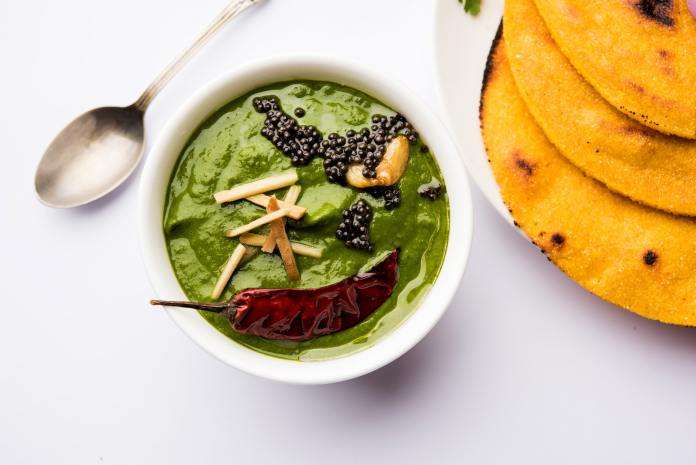
Makki Ki Roti Sarson Ka Saag
Bhey, also known as hot lotus stem, is a unique and savory meal that highlights Himachal Pradesh’s culinary inventiveness. Lotus stems are used in this unusual dish, which is prepared by slicing them and adding a variety of fragrant spices. The outcome is a delightful gastronomic feast. The lotus stem is first washed and peeled to reveal its white, crisp interior, which is then used to make Bhey. Then it is cut into thin rounds or strips so that it can be prepared as a delicious dish. Slices of lotus stem are cooked precisely so they keep their crispness and take on the savory flavors of the spices. Slices of the lotus stem are stir-fried in a skillet with a mixture of spices as part of the traditional preparation of Bhey. Red chili powder adds a fiery kick to the meal while turmeric gives it a vivid yellow tint. The entire flavor profile is improved with cumin and other balancing spices, resulting in a pleasing combination of flavors. To further improve flavor and give the dish depth, onions and tomatoes are frequently added. To produce the desired texture, the cooking process is closely watched. Slices of lotus stem are stir-fried till delicate but still have a hint of crunch, providing a delicious textural contrast. Each slice is covered in the spices, making each bite bursting with flavor. In Himachali cuisine, bhey is frequently served as a side dish to accompany major dishes like rice or roti. Beyond its culinary appeal, Bhey has a number of health advantages. The stem of the lotus plant is high in dietary fiber, vitamins, and minerals and low in calories. It is known to have antioxidant properties and may contribute to digestive health.
Sidu
Close up of two freshly baked loaves of bread.
Wheat flour and yeast are used to make the steamed bread known as sidu. It is a common food in the Himachal Pradesh region of Kangra and is frequently eaten with gravies or curries. Sidu is often served hot with a big dollop of ghee and has a soft, spongy texture. This conventional bread can be filled with a wide range of ingredients, such as poppy seeds, nuts, or even grated cheese, to give it a wonderful twist.
Auriya Kaddoo
Thai style dinner with pumpkin curry and rice, copy space
A distinctive pumpkin curry from Himachal Pradesh’s Kullu valley is called Auriya Kaddoo. It is made by simmering chopped pumpkin in a tomato-based gravy that has been spiced with cumin, turmeric, and red chili powder. With steamed rice or roti (Indian bread), the meal is renowned for its vivid color and the subtle sweetness of the pumpkin.
Bhagjery
Indian Hili festival sweet Gujiya or Gujia or karanji in a plate
Himachal Pradesh’s delicious snack known as bhagjery is proof of the area’s inventive cooking. Bhagjery is produced by first making a dough from wheat flour, yogurt, and a flavorful concoction of spices. The ideal consistency of the dough is achieved during kneading, guaranteeing a light and crispy texture after frying. Yoghurt gives the dough a subtle tanginess that improves the overall flavor profile. The cook’s artistic flair is displayed when the dough is shaped into spiral shapes after it has been made. The spirals of dough are then deep-fried until they are golden brown and have a pleasing crunch. Bhagjery is often enjoyed with a cup of tea, making a perfect accompaniment to the hot beverage. Its crunchy texture and savory taste provide a satisfying contrast to the aromatic flavors of the tea. In addition, bhagjery is also popular as a snack, offering a quick and delicious option for those looking for a tasty treat.
Kullu Trout
Baked trout with lemon,grilled trout
Food lovers, especially those in the Kullu area, retain a special place in their hearts for Kullu Trout, a well-known delicacy of Himachal Pradesh. This recipe highlights the richness and freshness of trout fish. Kullu Trout is prepared by gently marinating the fish in a blend of flavorful herbs and spices. This marinade gives the fish a flavor boost that enhances its inherent flavor. The marinated trout is then either grilled to perfection or cooked to perfection in a tandoor, a traditional clay oven. Kullu Trout is frequently served with a side of tangy mint chutney, which perfectly accentuates the flavors of the fish. The meal is typically served with rice or roti, giving guests the opportunity to savor the flavorful fish with a filling carbohydrate component.
Aktori
Traditional Indian rice pancakes Dosa with different dips chutney, seasonings
Aktori is a delicious pancake made of potatoes that originates in the lovely Kullu valley. Grated potatoes, rice flour, a concoction of flavorful spices, and a mix of herbs are combined to make Aktori. To bring out the natural flavors of the potatoes, this mixture is expertly seasoned. The pan-fried grated potato combination is then finished with a crisp exterior and a lovely golden brown color. What distinguishes Aktori is the contrast between the crunchy outside and the soft, sensitive interior. Both a snack and a full breakfast meal, aktori is delicious. It frequently comes with a side of mint chutney, which gives the flavors a zingy, reviving bite.
Mittha
Gajak Or Til Papdi
A beloved Himachali dish called mittha perfectly encapsulates sweetness and joy. Since this delicious dish is sweet, the Himachali word “Mittha” itself translates to “sweet” in English. Mittha is revered in Himachali culture and is frequently consumed on special occasions and celebrations. It is a necessary component of special events and happy occasions because it is seen as a symbol of luck and happiness. Rice is first cooked with milk, sugar, and a dash of fragrant cardamom to make Mittha. Rice is given time to absorb the milk’s flavors and the sugar’s sweetness as the combination simmers over low heat. The meal gradually becomes a creamy, decadent treat as it cooks. To improve it even further. As the dish cooks, it gradually transforms into a creamy and indulgent delight. To further enhance its taste and texture, Mittha is garnished with an array of nuts and raisins.
Sepu Vadi, a beloved traditional dish from the Mandi region of Himachal Pradesh, showcases the region’s rich culinary heritage. This savory delight consists of dumplings made from a combination of ground lentils, aromatic spices and fragrant herbs, which are then dipped in a piquant, flavorful sauce. The process of creating Sepu Vadi begins with the preparation of the dumplings. Ground lentils, together with a harmonious blend of spices and herbs, are mixed to form a cohesive paste. This paste is shaped into small dumplings, which are then steamed or fried to obtain the desired texture. The dumplings, with their unique combination of flavors, are then simmered in a tangy, flavorful sauce. Sepu Vadi is a tasty, hearty dish that can be enjoyed as a main course. Its robust flavors and satisfying texture make it a popular choice among locals and visitors alike.
Auriya Kalaadi
Shrikhand Vadi
The unique cheese dish Auriya Kalaadi, which comes from the lovely state of Himachal Pradesh, exemplifies the area’s passion for dairy ingredients and culinary artistry. Fresh cow’s milk is used to make this speciality dish, and it goes through a curdling process to become a solid and delicious cheese. The curdled milk is pressed to eliminate extra moisture to produce Auriya Kalaadi, a cheese with a firm texture. The cheese is then cooked with a delicious combination of herbs and spices after being chopped into cubes. The cheese is given a potpourri of flavors during the cooking process, which improves its flavor and gives it an exclusive Auriya Kalaadi savory aspect. In addition, Auriya Kalaadi can be added to curries, stir-fries or other traditional dishes, giving it a distinct taste and adding a savory touch to the preparation. Auriya Kalaadi’s versatility means it can be enjoyed in a variety of culinary contexts, making it a popular ingredient in Himachali cuisine.
Chilra
Traditional Indian rice pancakes Dosa with different dips chutney, seasonings
Chilra, a beloved traditional pancake from Himachal Pradesh, exemplifies the simplicity and deliciousness of the region’s cuisine. To prepare Chilra, the dough is made by mixing wheat flour with a blend of aromatic spices and water. The resulting mixture is then spread on a hot plate or tawa and baked until it takes on a beautiful golden color and crispy texture. This combination of flavors and textures makes chilra a versatile dish that can be eaten for breakfast, as a light snack or even as a side dish in a larger meal. Chilra’s simplicity is part of its charm. With a minimum of ingredients and a simple cooking process, it highlights the beauty of Himachali cuisine and the use of local ingredients to create delicious, healthy dishes.
Tudkiya Bhat
Aloo Poha
Tudkiya Bhat is a delicious rice-based dish from the Chamba region of Himachal Pradesh. It is a tasty combination of rice, lentils and aromatic spices such as cinnamon, cardamom and cloves. The dish takes its name from the use of “tudkiya” or “tadka” (temper) made with ghee, cumin seeds and asafoetida, which adds a distinct taste and aroma. Tudkiya Bhat is often eaten with raita (a yogurt-based accompaniment) or a spicy pickle.
The Tibetan Dishes
The momo platter.
There is a sizable Tibetan community in Himachal Pradesh, especially in and around Dharamshala and Mcleodganj. The regional culinary scene is given a special flavor by Tibetan cuisine. Momos, Thupka, Tingmo, Luchi Poti, and Naizha cake are a few of the well-known Tibetan delicacies served in Himachal Pradesh. These delectable treats are available at several stands and restaurants across the state, particularly in Mcleodganj, also known as Little Lahasa, where Tibetan culture is thriving.
Himachali cuisine truly reflects the region’s cultural past, its natural riches and the culinary prowess of its people. Himachali cuisine offers a unique and captivating gastronomic journey through a combination of aromatic spices, fresh ingredients and traditional culinary techniques. In addition to main courses and curries, Himachal Pradesh cuisine offers a variety of delectable snacks and sweets. Himachal Pradesh delights in satisfying every craving, whether savory or sweet, with dishes such as Babru, a crisp, savory fried bread with a spicy filling, and Mittha, a sweet, creamy dessert made from rice cooked in milk and topped with nuts. Himachal Pradesh also has something to satisfy every palate and leave you wanting more, whether you’re a meat lover or a vegetarian, a snacker or a dessert lover.
Designing your bedroom is a personal and exciting endeavour, but it comes with its fair share of pitfalls that can compromise the comfort and aesthetics of your sanctuary. This DIY interior design guide explores 15 crucial things to avoid, ensuring that your bedroom becomes a haven of tranquillity and style.
Neglecting Natural Light and Ventilation
Neglecting natural light and ventilation in interior design can have profound effects on both the aesthetics and functionality of a space. These elements are crucial aspects that contribute to the overall well-being of occupants and play a significant role in creating a comfortable and healthy environment.
One of the primary consequences of disregarding natural light in interior design is the creation of dark and gloomy spaces. Insufficient natural light can make a room feel cramped and unwelcoming, diminishing the overall appeal of the space. Inadequate lighting can also affect the color perception of the interior, leading to colours appearing dull and lifeless. This lack of brightness can contribute to a negative impact on the mood and productivity of the occupants.
Elegant modern living room interior design
Furthermore, the absence of natural light can have adverse effects on the health of individuals. Exposure to natural light is essential for regulating the circadian rhythm, the body’s internal clock that influences sleep-wake cycles. Neglecting natural light in interior spaces can disrupt these rhythms, potentially leading to sleep disturbances and a variety of health issues, including mood disorders and decreased overall well-being.
In terms of ventilation, poor air circulation within a space can result in stagnant air, leading to a build-up of pollutants and allergens. Inadequate ventilation can contribute to indoor air quality issues, impacting respiratory health and causing discomfort. The accumulation of moisture in poorly ventilated areas can also lead to mold growth, posing serious health risks to occupants and potentially causing structural damage to the building.
The importance of natural ventilation goes beyond air quality; it also plays a crucial role in maintaining thermal comfort. In the absence of proper ventilation, indoor spaces can become excessively hot or cold, depending on the external climate. This can lead to increased reliance on artificial heating or cooling systems, resulting in higher energy consumption and associated costs.
Neglecting natural ventilation also affects energy efficiency. Relying solely on mechanical systems to regulate temperature and air quality can lead to increased energy consumption and a higher carbon footprint. Incorporating natural ventilation strategies, such as strategically placed windows and ventilation openings, can reduce the need for constant reliance on mechanical systems, promoting sustainability and reducing environmental impact.
From a design perspective, neglecting natural light and ventilation limits the creative potential of a space. Natural light can be utilized as a design element, enhancing architectural features and creating dynamic visual effects. Additionally, well-designed ventilation systems can be integrated seamlessly into the overall aesthetic, contributing to a more cohesive and visually appealing interior.
Overlooking the Power of Colour
The power of color in interior design is often underestimated, yet it plays a crucial role in shaping the overall ambiance and functionality of a space. Overlooking the significance of color choices can have profound effects on the aesthetics, mood, and even the functionality of a room. In the realm of interior design, color is a potent tool that, when wielded thoughtfully, can transform a space into a harmonious haven or an unsettling environment.
Firstly, color has a direct impact on the mood and emotions of individuals within a space. Ignoring this aspect can result in a room that fails to evoke the desired feelings. For instance, a bedroom adorned with vibrant red walls might create a stimulating and energetic atmosphere, making it challenging for occupants to relax and unwind. Similarly, a workspace dominated by dull and monotonous colours could stifle creativity and productivity. By disregarding the psychological effects of color, designers risk creating environments that are at odds with their intended purposes.
Furthermore, the neglect of color can lead to an imbalance in visual appeal and cohesiveness. Each color has its own set of visual properties, including intensity, warmth, and coolness. A failure to consider these factors may result in clashes and discord within a space. A haphazard mix of colours can be visually jarring and detract from the overall aesthetic appeal of a room. This oversight can render an otherwise well-designed space into a chaotic and disorganized setting, diminishing its visual impact and functionality.
In addition, the role of color extends beyond mere aesthetics; it can influence the perceived size and functionality of a space. Dark colours tend to absorb light, making a room appear smaller and more confined. Conversely, lighter hues can create an illusion of spaciousness and airiness. Overlooking these principles may lead to the inadvertent distortion of spatial perception. A cramped and claustrophobic feel in a room meant for relaxation or a sense of emptiness in a communal area are unintended consequences that can arise from neglecting the impact of color on spatial perception.
Ignoring Personal Comfort
White bedroom interior
Ignoring personal comfort in interior design can have profound effects on the functionality, aesthetics, and overall well-being of individuals within a space. Personal comfort is a critical aspect of interior design, as it directly impacts how people experience and interact with their surroundings. When designers neglect the importance of comfort, several negative consequences can emerge.
Firstly, disregarding personal comfort may result in a lack of functionality in the interior designed space. Practical aspects such as ergonomic furniture, proper lighting, and adequate ventilation contribute significantly to the comfort of individuals using the space. If these elements are overlooked, people may struggle with discomfort, leading to decreased productivity and satisfaction. For instance, uncomfortable seating arrangements or poor lighting can cause physical strain, eye fatigue, and other health issues, making it difficult for occupants to engage in daily activities comfortably.
Secondly, the aesthetic appeal of a space can be compromised when personal comfort is ignored. While visual appeal is undoubtedly crucial in interior design, it should not come at the expense of comfort. An overly stylized or trendy interior design that prioritizes aesthetics over functionality can result in a space that looks impressive but feels unwelcoming. People may be hesitant to spend time in such an environment, affecting their overall experience and satisfaction with the space.
Furthermore, neglecting personal comfort can lead to increased stress levels and a negative impact on mental well-being. Comfortable surroundings contribute to a sense of security and relaxation, whereas discomfort can induce stress and anxiety. For example, a lack of consideration for acoustics may result in a noisy environment, disrupting concentration and contributing to heightened stress levels. Adequate thermal control is another essential factor; a space that is too hot or too cold can cause discomfort and negatively affect occupants’ moods and productivity.
Cluttered Spaces and Poor Organization
Modern bedroom interior
Cluttered spaces and poor organization can have significant and far-reaching effects on the overall design and functionality of an interior space. In interior design, the arrangement of furniture, accessories, and overall organization plays a crucial role in creating a harmonious and aesthetically pleasing environment. When these elements are neglected, the consequences can impact both the visual appeal and the functionality of the space.
One of the most immediate effects of cluttered spaces is the visual chaos it creates. A room filled with too many items or poorly organized furnishings can feel overwhelming and disorienting. This visual clutter can detract from the intended design scheme and make it difficult for inhabitants to focus on specific elements or appreciate the overall aesthetic. It diminishes the potential beauty of a space and can even make it appear smaller than it actually is.
In addition to the visual impact, clutter can hinder the functionality of a space. Poor organization often leads to a lack of designated storage areas, making it challenging to keep belongings in order. This can result in a space that feels cramped and inefficient, with occupants struggling to find what they need when they need it. In a residential setting, this can contribute to stress and frustration, while in a commercial or office space, it can impede productivity and workflow.
Overemphasizing Technology
Cozy bedroom interior
Overemphasizing technology in interior design can have both positive and negative effects, shaping the way spaces are conceived, experienced, and utilized. While technology can bring innovation and efficiency to design processes, it is crucial to strike a balance to ensure that the human element and the overall aesthetic appeal of spaces are not overshadowed.
One of the positive effects of incorporating technology into interior design is the potential for enhanced functionality and convenience. Smart home technologies, for instance, allow for the integration of automated systems that can control lighting, temperature, and security. This not only increases energy efficiency but also provides occupants with a more comfortable and secure living environment. In commercial spaces, technology can be utilized to optimize workflow and improve productivity, contributing to a more efficient and effective workplace.
Furthermore, virtual reality (VR) and augmented reality (AR) have emerged as powerful tools in the interior design process. Designers can create virtual walkthroughs of spaces, allowing clients to experience and visualize designs before they are implemented. This not only streamlines the decision-making process but also ensures that clients have a more accurate understanding of the final result. However, overreliance on such technologies may lead to disconnect between the virtual and physical aspects of design, potentially diminishing the tactile and sensory experiences that contribute to a well-rounded design.
Ignoring Proper Lighting
cozy modern bedroom interior with bed
In terms of functionality, improper lighting can hinder various activities within a space. For example, insufficient task lighting in a kitchen can make it challenging to prepare food safely and efficiently. In a workspace, poor lighting conditions may lead to eye strain, reduced productivity, and increased errors. Neglecting to incorporate proper lighting for specific tasks can compromise the functionality of a room and affect the overall user experience.
Moreover, the visual appeal of interior elements and furnishings is significantly affected by lighting. A well-lit space enhances the colours, textures, and patterns of materials, furniture, and decor. In contrast, inadequate lighting can make even the most carefully chosen design elements appear bland and unremarkable. Shadows and poorly illuminated areas can distort the perception of shapes and sizes, diminishing the overall visual impact of the interior.
One of the most noticeable effects of ignoring proper lighting is the compromise of safety and security within a space. Insufficient lighting in hallways, staircases, or entryways can create tripping hazards and increase the risk of accidents. In residential settings, poor lighting can also contribute to a sense of insecurity, making occupants feel vulnerable. Adequate lighting, particularly in key areas, is essential for creating a safe and secure environment.
Disregarding Scale and Proportion
Minimal Bedroom Interior
One significant impact of neglecting scale and proportion is the creation of a distorted and unsettling atmosphere. Imagine walking into a room where the furniture is disproportionately large or small in relation to the space. This can lead to a sense of unease and discomfort for the occupants, as the elements within the room don’t relate harmoniously to one another. Oversized furniture can make a room feel cramped and claustrophobic, while undersized elements may create a sense of emptiness and insignificance.
Moreover, disregarding these principles can result in a loss of functionality. Furniture that is too large may impede the flow of movement within a space, making it challenging to navigate comfortably. On the other hand, furniture that is too small might not fulfil its intended purpose effectively. For example, a dining table that is too small for the dining area can undermine the practicality of the space, making it difficult for people to gather and dine comfortably.
Inconsistencies in scale and proportion also impact the visual balance of a room. A well-balanced interior design considers the size and placement of each element to create a cohesive and pleasing composition. Disregarding these principles can lead to a visually chaotic or monotonous space. An overly crowded room with disproportionately sized elements can overwhelm the senses, while a room with too much empty space might lack visual interest and warmth.
Neglecting the Importance of Art and Personal Touches
Light and airy cozy bedroom with bed, lamps, cushions and plant. No people. Home interior
Neglecting the importance of art and personal touches in interior design can have profound effects on the overall ambiance and functionality of a space. The essence of interior design lies not only in creating visually appealing environments but also in reflecting the personality and preferences of the occupants. When art and personal touches are disregarded, the result is often a sterile and impersonal space that lacks character and warmth.
One significant consequence of neglecting art in interior design is the missed opportunity to evoke emotions and create a sense of connection within a space. Art has the power to convey stories, provoke thought, and evoke feelings. Without carefully curated artwork, a room may feel empty and devoid of the personal narratives that make a space truly unique. Art serves as a form of expression, allowing individuals to communicate their tastes, interests, and values. When this crucial element is overlooked, the interior design becomes generic and fails to capture the essence of the people who inhabit it.
Personal touches, such as family photos, cherished mementos, or handmade items, play a crucial role in transforming a house into a home. Neglecting these elements can result in an environment that lacks a sense of belonging and personal identity. A home should be a reflection of the people living in it, and personal touches are the means through which individuals can imprint their personalities onto the space. Without these elements, the interior design becomes detached and fails to create a living environment that resonates with the occupants.
Poor Placement of Furniture
Child bedroom with modern furniture
One of the primary consequences of poor furniture placement is a lack of harmony and balance in the room. When furniture is randomly arranged without consideration for the overall layout, it can result in a chaotic and uncoordinated appearance. This lack of visual balance can make the space feel uncomfortable and disorganized, detracting from the intended design concept. Proper placement, on the other hand, helps achieve a sense of equilibrium, creating a visually appealing and harmonious environment.
Inefficient use of space is another significant issue associated with poor furniture placement. Improperly arranged furniture can lead to wasted space or overcrowding, making the room appear smaller than it actually is. This can impede the flow of movement within the space and diminish the functionality of the room. Effective furniture placement involves optimizing the available space to enhance both usability and aesthetics, ensuring that every corner of the room is utilized purposefully.
Moreover, inadequate furniture arrangement can negatively impact the functionality of the space. For example, placing furniture in a way that obstructs natural pathways or hinders access to essential areas can create inconvenience and frustration. This can be particularly problematic in areas with heavy foot traffic, such as living rooms or hallways. A well-thought-out furniture layout takes into account the intended use of the space, ensuring that it facilitates ease of movement and access to key elements.
Forgetting About Textures during Interior Design
Textures also contribute significantly to the tactile experience of a space. Ignoring this aspect can result in a room that feels uninviting and uncomfortable. Consider the difference between sittings on a hard, cold metal chair versus a soft, upholstered one. The tactile qualities of materials influence the perceived comfort and functionality of furniture and surfaces. Neglecting textures may mean sacrificing comfort and usability for the sake of aesthetics, leading to an impractical and unwelcoming environment.
Furthermore, textures play a crucial role in defining the overall style and theme of a space. Different textures evoke various emotions and moods. For example, a room dominated by sleek, polished surfaces may feel modern and minimalist, while one featuring rustic wood and natural fibres may exude a more relaxed and organic vibe. Forgetting about textures can result in a design that lacks a cohesive and intentional style, leaving occupants with a sense of confusion or disconnection from the space.
In addition to the visual and tactile aspects, textures also contribute to the acoustic environment of a room. Surfaces with varying textures can help absorb or reflect sound, influencing the acoustics of a space. Neglecting this aspect may lead to unintended consequences, such as a room that echoes excessively or feels uncomfortably quiet. Considering texture as part of the overall design strategy can contribute to creating a balanced and pleasant acoustic environment.
Skimping on Bedding Quality
Durability is another crucial factor affected by the decision to skimp on bedding quality. Higher-quality bedding materials are more likely to withstand wear and tear over time, ensuring a longer lifespan for the products. Cheap bedding may quickly show signs of wear, such as fading colours, pilling, or fraying seams. This compromises the longevity of the bedding, leading to frequent replacements and ultimately costing more in the long run. Opting for quality bedding is an investment in durability, reducing the need for frequent replacements and maintenance.
The tactile experience of bedding is also essential for creating a welcoming and enjoyable bedroom environment. Quality fabrics, such as high-thread-count cotton or luxurious linen, provide a soft and pleasant feel against the skin. Skimping on bedding quality often results in rough, uncomfortable textures that can be a daily source of discomfort for the occupants. The tactile aspect of bedding contributes to the overall sensory experience of the bedroom, influencing the occupants’ perception of comfort and luxury.
Furthermore, the decision to skimp on bedding quality may affect the overall theme and coherence of the interior design. Inconsistencies in the quality of different elements within a room can create a disjointed and inharmonious look. Investing in high-quality bedding allows for better integration of design elements, ensuring a cohesive and well-thought-out aesthetic that enhances the overall interior design scheme.
Ignoring the Importance of Headboard Selection
The headboard is a significant element in interior design, often serving both functional and aesthetic purposes in a bedroom. Ignoring its importance can have various effects on the overall design and comfort of the space. In this essay, we will explore the repercussions of neglecting the selection of a headboard in interior design.
Firstly, from a practical standpoint, a headboard provides essential support and protection for the bed. Its primary function is to act as a barrier between the wall and the bed, preventing damage to both. Without a headboard, the bed is left vulnerable to wear and tear, leading to unsightly marks on the wall and potential damage to the bed frame. Over time, this can result in increased maintenance costs and a less durable sleeping environment.
Furthermore, a headboard contributes to the overall comfort and functionality of the bed. It serves as a backrest for those who enjoy sitting up in bed to read, work, or watch television. The absence of a headboard means sacrificing this added comfort, limiting the versatility of the bed and reducing its functionality as a multi-purpose space. This oversight can have a direct impact on the user’s experience, making the bedroom less conducive to relaxation and leisure activities.
Disregarding the Feng Shui Principles
One significant effect is the disruption of energy flow within the space. Feng Shui emphasizes the importance of allowing chi to move freely and harmoniously throughout a room. Disregarding this principle may result in stagnant or chaotic energy, leading to a sense of discomfort or unease for the occupants. This disruption can manifest in various ways, including increased stress, decreased productivity, and a general sense of imbalance.
Another consequence of neglecting Feng Shui is the potential impact on health and well-being. According to Feng Shui principles, the arrangement of furniture and the overall layout of a space can influence the health of its inhabitants. Ignoring these guidelines may contribute to an environment that is less supportive of physical and mental well-being. Poorly placed furniture, cluttered spaces, and improper lighting can create an atmosphere that hinders relaxation and promotes stress, potentially leading to health issues over time.
Overcrowding with Too Many Decorative Elements
One of the primary consequences of overcrowding is the loss of a sense of balance and proportion within the space. When too many decorative elements are crammed into a room, it becomes challenging to establish a cohesive design theme. The visual weight of various elements competes for attention, resulting in a lack of focal points and a disjointed overall appearance. This imbalance can make the space feel overwhelming and disorganized, hindering the intended aesthetic impact.
Moreover, overcrowding tends to diminish the functionality of a space. Decorative elements are not just about visual appeal; they should also contribute to the usability and comfort of the area. When a room is cluttered with excessive decor, it becomes difficult to navigate and use the space efficiently. Furniture and other functional elements may be overshadowed or impeded by the surplus of decorative items, undermining the practical aspects of the design.
Another significant effect of overcrowding is the creation of a visually overwhelming environment. The human eye naturally seeks simplicity and coherence in design. Too many decorative elements can bombard the senses, making it challenging for individuals to relax and enjoy the space. This sensory overload can lead to feelings of stress and discomfort, precisely the opposite of what a well-designed interior should evoke.
Sacrificing Privacy
In the digital age, where smart homes and interconnected devices are becoming increasingly prevalent, sacrificing privacy in interior design extends beyond physical spaces. The integration of technology, such as smart cameras, voice-activated assistants, and sensors, can lead to constant surveillance within the home. While these technologies offer convenience and efficiency, they also raise significant privacy concerns. Individuals may feel like their every move is being monitored, leading to a sense of unease and the potential for the misuse of personal information.
Furthermore, the sacrifice of privacy in interior design can impact interpersonal relationships. Shared living spaces, whether in a family home or a communal setting, require a delicate balance between communal and private areas. When privacy is compromised, conflicts may arise as individuals struggle to find spaces where they can engage in personal activities without feeling observed or judged. This lack of privacy can strain relationships and hinder the development of a harmonious living environment.
On a societal level, the sacrifice of privacy in interior design contributes to the normalization of surveillance culture. Acceptance of intrusive design elements may desensitize individuals to the importance of privacy, paving the way for broader societal implications. As technology advances and data collection becomes more pervasive, the erosion of privacy in the design of physical spaces can set a precedent for increased surveillance in other aspects of life.
In conclusion, the process of designing your bedroom should be a thoughtful and intentional endeavour. By avoiding these 15 common mistakes, you can transform your bedroom into a haven of tranquillity and personal expression. Embrace your creativity, prioritize comfort, and let your bedroom reflect the serene sanctuary you deserve.
The largest religious festival in India which attracts millions of people from all over the world, and where people take a dip in the divine water is the Kumbh Mela.The Kumbh Mela, a significant Hindu religious festival occurring every twelve years at the confluence of the Ganga and Yamuna Rivers in Allahabad, India, presents a unique case for interdisciplinary research in areas like urban planning, public health, and crowd management. This festival, which is considered the largest public gathering in the world, attracts tens of millions of pilgrims over a few weeks. Its size and complexity have made it a subject of interest for scholars and researchers worldwide.
The site of the observance rotates around four pilgrimage places on four sacred rivers—
at Prayag (modern Allahabad) at the confluence of the Ganges, the Jamuna, and the mythical Sarasvati.
Each site’s celebration is based on a distinct set of astrological positions of the Sun, the Moon, and Jupiter, the holiest time occurring at the exact moment when these positions are fully occupied. The Kumbh Mela at Prayag, in particular, attracts millions of pilgrims. In addition, a Great Kumbh Mela festival is held every 144 years at Prayag; the 2001 festival attracted some 60 million people.
Adnan Abidi/Reuters
Who will attend?
Kumbh Mela festival in Varanasi, offerings to the gods
Attendees at the Kumbh Mela come from all sections of Hindu religious life, ranging from sadhus (holy men), who remain naked year-round or practice the most severe physical discipline, to hermits, who leave their isolation only for these pilgrimages. The religious organizations represented range from social welfare societies to political lobbyists. Vast crowds of disciples, friends, and spectators join the individual ascetics and organizations. The naga akhadas, militant ascetic orders whose members formerly made their livings as mercenary soldiers and traders, often claim the holiest spots at each Kumbh Mela’s most propitious moment. Although the Indian government now enforces an established bathing order, history records bloody disputes between groups vying for precedence.
Tradition ascribes the Kumbh Mela’s origin to the 8th-century philosopher Shankara, who instituted regular gatherings of learned ascetics for discussion and debate. The founding myth of the Kumbh Mela—attributed to the Puranas (collections of myth and legend)—recounts how the gods and demons fought over the pot (kumbha) of amrita, the elixir of immortality produced by their joint churning of the milky ocean. During the struggle, drops of the elixir fell on the Kumbh Mela’s four earthly sites, and the rivers are believed to turn back into that primordial nectar at the climactic moment of each, giving pilgrims the chance to bathe in the essence of purity, auspiciousness, and immortality. The term Kumbh comes from this mythic pot of elixir, but it is also the Hindi name for Aquarius, the sign of the zodiac in which Jupiter resides during the Haridwar Mela.
What does it teach to the present world??
It teaches the meaning of humanity
The sea of humanity, the ocean of tents, the colorful flags, lakhs of pilgrims taking a dip in the water, the smell of the smoke from the holy fires, the beautiful sunrise all these will restore your love for humanity. You will realize that overpopulation is not the problem of the world. It is our lack of tolerance. When you learn the secret of co-existence in the Kumbh, you carry it wherever you go and you become an embodiment of that same energy.
It explains the power of water and wash away all the sins
According to the ancient stories and vedantas, when millions gather at the Kumbh, their devotion turns the very water into Amrit – the nectar of immortality. Having a dip in this water literally cleanses all your sins. Sins are incomplete ideas that you store in your system due to the lack of energy to look into them. The energy field of the kumbh will literally blast them away – like the Ganga flowing into a small stagnant pond!
To find yourself and adjust with your surroundings
Here is a quotation by Jack Hebner from his book on the 1990 Kumbha Mela “The very foundation of my conception of life, the reality in which I lived, was shaken at its root. I was forced by circumstances to find a new identity within myself and adopt a completely new value system. My western values were not enough to deal with the profoundity of the Kumbh Mela. What ensued was an unforgettable experience and a true understanding of the Kumbh Mela. I began to understand why millions of people attend the Kumbh Mela and I began to imbibe an inkling of their faith”. I think this quote tells it all.
Meet the mystics and get thrilled by their miracles
In the Kumbh you can see many Sadhus performing seemingly impossible tasks of endurance during their Tapas. You will meet one or more on every street corner. Sadhus who have stood on one leg for decades; those who can stay under water for hours; who can read your mind; pull trucks with their genitals; who stay buried in the sand upside down – for the whole duration of the Kumbh! and so on and so forth. And if you know where to look, and how to look, you can experience true miracles and spiritual powers – called as Siddhis – as opposed to feats of endurance or sleight of hand tricks that you are used to. And maybe some of them may even initiate you in to these powers if you are lucky!
The next Kumbh is going to be held at Prayag. It is called the “Ardh Kumbh Mela”, held for every six years. So, make plans for the Kumbh, enjoy, have fun, make memories and cherish them through out your life…Because… The Kumbh is a real treasure trove for people who seek more than the ordinary in their lives.
Overview of the Festival
Location and Frequency: The Kumbh Mela occurs every twelve years at the confluence of the Ganga and Yamuna Rivers in Allahabad, India.
Size and Scale: It is the world’s largest public gathering, with the 2013 festival attracting over 50 million pilgrims in a few weeks.
Urban Planning and Infrastructure
Temporary Mega-City: This event is a prototype for ‘pop-up mega-cities’, featuring a temporary city with spatial zoning, an electricity grid, and water distribution systems.
Infrastructure Challenges: Providing comprehensive infrastructure in a temporary setup is a primary challenge, addressing needs like roads, clean water, and sanitation.
Public Health Implications
Healthcare and Disease Surveillance: The festival implements mass vaccinations and disease surveillance systems to monitor and manage public health concerns.
Crowd Management and Safety
Crowd Dynamics Study: The Kumbh Mela Experiment aims to understand crowd dynamics using big data and IoT, focusing on pedestrian safety and crowd risk.
Safety Innovations: Enhanced safety measures include the deployment of 20,000 police personnel and the construction of 18 pontoon bridges capable of holding 500,000 people per hour.
Cultural and Religious Significance
Religious Practice: Millions of pilgrims bathe in the Ganges River, which is considered a sacred act.
Cultural Diversity: The event showcases India’s cultural diversity, with participants from various castes, classes, regions, and religions.
Environmental Impact
Study of Environmental Aspects: Academic interest includes the environmental impact of materials used for religious purposes, such as the disposal of millions of marigolds.
Government Administration and Collaboration
Government’s Role: The government facilitates essential services like power (960 kilometers of power lines), sanitation (34,000 toilets with bio-digester technology), and healthcare.
Collaboration for Success: Collaboration with various sectors ensures the provision of services on a massive scale.
Data-centric Analysis
Attendance Figures: The 2013 Kumbh Mela attracted over 50 million pilgrims, while the 2016 event in Ujjain drew approximately 75 million.
Infrastructure: The event required significant infrastructure support, including 960 kilometers of power lines, 690 kilometers of water lines, and 34,000 toilets.
Safety and Security: To ensure the safety of millions of attendees, the festival deployed 20,000 police personnel and 7,000 sanitation workers, operating round the clock.
The Kumbh Mela represents a rich case study in managing large-scale human gatherings, offering valuable insights into urban planning, public health, environmental impact, and cultural significance. The data-centric approach to studying this event provides a deeper understanding of its complexities and the innovative solutions employed to address them.
Hey there, peeps! We get it, dealing with obesity can be a real buzzkill. But fear not, because we’ve got your back. Let’s be real, our diets can be major players in this game. So, we’re here to spill the beans on the 30 absolute worst foods that are like, major culprits in packing on those extra pounds. Say goodbye to the bad stuff, and get ready to level up on your health journey. It’s time to kick these foods to the curb and say hello to a healthier, happier you!
Losing weight requires a lot of hard work. Eating nutritious foods, limiting calories, and exercising. But if your kitchen is stocked with diet-sabotaging junk foods, it is going to be quite difficult for you to lose weight. Some of the food appearing on this list may look healthy, many of them are high in saturated fats, calories and make your weight loss a distant dream.
1. Potato Chips
Okay, so you probably already know that potato chips are fattening. They also disguise hazardous levels of sodium. Potato Chip is the greatest enemy among all the items that might make you obese—soda, junk food, ice cream, and so on. According to a Harvard study published in The New England Journal of Medicine, potato chips are the food most strongly connected with the weight increase.
2. French Fries
Spicy Japanese Togarashi Shichimi French Fries
The second food item that Harvard researchers discovered to be the most fattening is French Fries. French Fries is linked to an extra 3.35 pounds of weight gain. The tasty baked potato increases levels of blood sugar and insulin more quickly and to higher levels than an equal amount of calories from pure table sugar. French fries are as bad for your health as Potato Chips, but with an extra blast of fat.
3. Fatty Red Meat
Red meat is another of the top weight-gain-inducing foods, according to a study published in The New England Journal of Medicine. According to the China Health and Nutrition Survey, the difference between meat that induces belly weight gain and meat that keeps your metabolism working is the fatty nature of the cut. So, if you’re attempting to lose weight, stay away from fatty ground beef mixes that are 70% lean and 30% fat.
4. Processed Meats
Bacon, sausage, and hot dogs may taste heavenly, but pose a grave danger to your health. Over a four-year study, Harvard researchers have concluded processed meat consumption leads to an additional 0.93-pound weight gain. A higher risk of diabetes, cancer, and hypertension has also been linked to processed meat. But that doesn’t mean you immediately cut off processed meat altogether from your diet. Balance the portion of processed meat in your diet.
5. Restaurant Desserts
Sodium, along with sugar, calories, fat, and everything else, is a major weight contributor. These sweets are frequently large and served at the end of a luxurious supper, adding nearly a thousand calories to an already excessive meal. Eating out can be considered a treat, and if you’re truly there for the dessert, picking your dessert first is a better approach to balance your meal. According to a new study, choosing your dessert first can help you eat fewer calories overall! Adjust your main course to be healthier, and then split the dessert you truly want with a partner to make the dinner more balanced.
6. Alcohol
Relax, we’re not saying you can’t have a glass of wine or beer now and then, but it’s no secret that drinking too much alcohol can sabotage your weight-loss efforts and put your health at risk. Alcohol consumption has also been demonstrated to cause your body to eat more. Researchers at the University of Liverpool discovered that just two beverages can considerably boost the amount of food we consume by altering our perception of food and making it appear more delectable.
7. Sugary Cereals
Sweet squares and fruity puffs don’t help you stay healthy or lose weight, and several kinds of cereal have more calorie-dense sugar per bowl than a Boston Kreme Donut! If you want to lose weight, go for something more full like overnight oats. Even though the calories in both meals are the same, a study published in the Annals of Nutrition and Metabolism found that eating oatmeal for breakfast leads to more fullness, less appetite, and fewer calories are taken at lunch than eating corn flakes.
8. Sweetened Beverages
High-fructose corn syrup is used in a lot of sodas (HFCS). According to Princeton University studies, HFCS can induce the same amount of weight gain as ordinary table sugar. In one animal study, all of the rats who ate HFCS were obese, a finding that hasn’t been replicated in other diet studies. Even when their overall caloric intake was the same, rats fed other kinds of sugar gained less weight than those fed HFCS, according to the study. Substitute water, smoothies, tea, or coffee for soda. Check out the detox waters for weight reduction for more hydration ideas!
9. Diet Soda
Low-calorie does not always imply low sugar. Artificial sweeteners are used in most diet sodas, and they have the same effect on your body as refined sugar. Artificial sweeteners cause weight gain and lead to obesity. Diet soda drinkers had nearly three times the amount of belly fat as individuals who didn’t drink diet soda, according to a study published in the Journal of the American Geriatrics Society.
10. White Bread
When it comes to losing belly fat, excessively processed white bread should be avoided at all costs. According to studies, eating whole grains reduces abdominal fat deposition, whereas eating processed grains increases them. For food that won’t ruin your waistline, try reworking your favourite recipes with whole wheat flour or almond flour.
11. Chocolate Bars
All of us know chocolate and weight loss don’t go hand in hand. Well, you might want to rethink that. Dark chocolate provides a slew of health benefits, including weight loss. Milk chocolate, on the other hand, is a common cause of growing waistlines, thanks to its high-calorie content and high sugar content, which contribute to visceral fat accumulation. Chocolate bars were shown to be the food with the highest calorie density, and hence the most connected with weight gain, so it’s probably best to leave them out of your weight reduction diet.
12. Granola
Granola can be a tasty addition to yoghurt or cereal in the morning, but certain varieties are high in fat and added sugars, adding up to 220 calories or more per 1/4 cup. If you are a granola fan, try to opt for a low-sugar variety. You could also make your homemade granola with any ingredients you choose.
13. Canned Soup
Soups aren’t all made equal. Especially those made with cream and those fresh from the can. Soups made with cream include a lot more calories and fat. And canned soups are manufactured foods that are high in sodium, which promotes bloating in the stomach, as well as increasing your appetite and impairing your capacity to recognise when you’re full, which is counterproductive to weight loss.
14. Pancake Syrups
Famous syrup brands like Aunt Jemima and Mrs Butterworth contain two substances you should avoid at all costs: high fructose corn syrup and caramel colouring, both of which are harmful to your health and grow your gut. High fructose corn syrup is a substance that has been associated with abdominal obesity, overall weight increase, insulin sensitivity issues, and the desire to consume more. Stick to 100 percent pure maple syrup in moderation if you wish to reduce weight.
15. Juice
Although juice cleanses are fashionable right now, it’s the technique used to prepare juice that is problematic. Packaged juices remove the most satisfying component – fibre – from the sugary beverage. With no fibre, you’re left with a calorie-dense beverage that boosts your blood sugar. Studies have shown that the calories in juice do not fulfil our bodies any more than the calories in food. So drink water for thirst and hydration and eat entire fruits and vegetables with their fibre intact.
16. Pie
We know it’s not easy to make a pie, but be cautious in the region of lattices and crumble tops. One of the most effective sources of trans-fat in the American diet is baked desserts. A 14-year study involving 80,000 women discovered a link between heart disease and trans fatty acid consumption, so steer away from it at all costs—your ticker and waistline will thank you!
17. Muffins
The name of your muffin top is apt: A normal blueberry muffin has approximately 400 calories and a third of the fat for the day. Furthermore, many commercial muffins include waist-widening soybean oil and trans fats, a substance linked to an increased risk of heart disease. Worst of all, muffins are nearly entirely made of sugar. Because this sugar is quickly digested and absorbed, your body is left hungry for more. If you want to lose weight, skipping Starbucks’ pastry case is a no-brainer.
18. Bagels and Croissants
Even though both of these selections look to be large and filling, they are made of white sugar and flour. They are devoid of fibre and nutrients. As a result, your blood sugar spikes and then plummets, making you feel even hungrier than before you started eating these delights. And you won’t get any closer to your weight loss goals if you’re always hungry.
19. Doughnuts
Julieanna Hever, a plant-based dietitian and author of The Vegiterranean Diet and The Complete Idiot’s Guide to Plant-Based Nutrition, says, “It’s no surprise doughnuts are nearly entirely made of sugar.” “Doughnuts quickly break down into simple sugars in the body, prompting the release of more insulin. When you have a lot of insulin, a lot of sugar goes into your cells, leaving no sugar for your circulation. The end consequence is a drop in blood sugar, which makes you hungry quickly after eating.”
20. Drive-Thru Fast Foods
If you want to lose weight, keep driving as fast as you can. “Preservatives, trans fats, HFCS, and salt are all included in these highly processed meals. Preservatives and trans fats interfere with our stomach’s ability to connect with our brain, which is why you should be concerned, “Rebecca Lewis, RD at HelloFresh, adds. “As a result of the lack of satiety-related hormones and neurotransmitters in the brain, the brain loses its ability to identify when we are full, and we just eat more.”
21. Refined Sugar
Refined sugar, in all of its forms, is a key contributor to belly obesity, and we, as Americans, sadly, treat it as a diet mainstay. While the World Health Organization recommends that we consume no more than ten percent of our total calories from sugar, UCSF researchers found that the average American consumes three times the recommended daily limit. Fortunately, with increasing food labelling for added sugars, sugar slipping into anything from cereal to pasta sauce is easy to notice.
22. Bottled Smoothies
The fact that bottled smoothies contain fruit does not imply that they are healthy for you or your waistline. Many of them have shockingly high sugar content, with some bottles containing as much as 52 grams of sugar per bottle! Instead, mix your smoothies at home using components that will speed up your metabolism and activate your fat-burning genes.
23. Dried Fruit
Although dried fruit appears to be a healthy snack option, most dried fruits are sweetened and include an average of 16 grams of sugar per ounce. This quickly adds up, especially when it goes unnoticed as a “healthy” item, making it easy to eat by the handful.
24. Refined Pasta
Whole grain pasta can be a healthy part of your weight-loss plan if consumed in moderation, but refined white spaghetti will slam into your belly with a vengeance. There are two main reasons for this: first, refined pasta has had the majority of its nutrients and fibre removed, and your body treats it like sugar, storing fat in your belly. Second, most individuals eat pasta with store-bought sauces, which are high in sugar and sodium, adding to your ever-increasing girth.
25. Beer
The dreaded “beer belly” is well-known, and studies suggest that consuming beer is linked to a higher BMI and a wider waist circumference. But, aside from its high calorie and carb content, it’s possible that this isn’t due to any mystical features that distinguish beer from other types of alcohol. Beer drinkers may make less nutritious food choices overall, leading to their rising waistlines, in addition to the hundreds of calories a beer or two a day can contribute to your diet.
26. Large Coffee Drinks
While coffee has certain benefits for decreasing belly fat, most frozen coffee drinks are the enemy of your waistline. Some of this dairy- and sugar-laden alternatives from your local coffee shop may pack in up to 600 calories per drink, or even more if you add a dab of whipped cream on top! According to a 2017 study published in the journal Public Health, approximately 70% of coffee drinkers add caloric add-ins (such as sugar and creamers) to their coffee, and these persons consume up to 16% of their daily calorie intake from sipping on their coffee concoction.
27. Cookies
Oreos, America’s favourite cookie, are filled with double the trouble. According to 2013 animal research, Oreos are more addictive than cocaine and morphine because they contain palm oil, a lipid that stimulates fat-causing inflammation. Cookies were determined to be one of the most difficult items to eat in moderation, according to a second study.
28. Soybean Oil
Manufacturers shifted to pumping their products with vegetable oils such as soy, corn, sunflower, safflower, or palm oil after we learned about the artery-clogging consequences of trans fats, which wasn’t any better. This is because these vegetable oils are heavy in the inflammatory fat omega-6 and low in the anti-inflammatory fat omega-3. Inflammation has been linked to obesity, therefore eating inflammatory foods like soybean oil won’t help you lose weight.
29. Burgers
Saturated fats may have been cleared of their link to heart disease, but that doesn’t mean they’re out of the woods yet. This is because saturated fats have been linked to inflammation in white adipose tissue (fat tissue) in several studies. This white fat stores energy rather than burning it as brown fat cells do. According to a study published in the journal Expert Review of Cardiovascular Therapy, as your fat cells get larger as your saturated fat intake increases, they release pro-inflammatory chemicals that promote systemic inflammation and weight gain.
30. Pizza
Pizza isn’t exactly a “diet food,” as we all know. It contains a lot of calories, saturated fat, sodium, and refined carbs, which all contribute to belly fat gain. Pizza is also second only to burgers and sandwiches in terms of the amount of saturated fat it contributes to Americans’ diets. Pizza accounts for 6% of your overall saturated fat intake in terms of calories per day. And, because saturated fat consumption is linked to inflammation, it’s likely to stymie your weight-loss efforts.
It’s easy for people to feel overwhelmed by the daily barrage of media attention concerning obesity, weight, and health. However, there are easy steps you can take to help maintain a healthy weight and reduce your risk of many chronic conditions.
India is a country where cultural diversity is celebrated at every occasion. Every state has a different language, different culture, and a different dance form which is very personal to it. It’s not like no other state performs the folk dance of other ones. But, the unique folk dance is the identity of its respective state. We can see the great impact of Westernized culture on today’s youth. But, even the lash of modernization couldn’t eliminate the importance of folk dance forms.
India is a country where you can find dance for every occasion, be it celebrations, thanksgiving, worship, everything. The list is very long but I am going to enlist the folk dances forms here. Save the rest for later.
Kathak
Foot of an Indian woman dancing kathak on the stage
Kathak, a classical dance originating from Uttar Pradesh in India, is a harmonious blend of storytelling and rhythmic footwork. It’s an art form that narrates tales through graceful movements and expressive gestures, deeply rooted in Indian culture.
The Evolution of Kathak
From Storytelling to Courtly Splendor: Initially, Kathak was a storytelling medium, conveyed by traveling bards known as Kathakars. They depicted tales from Indian epics and mythology through dance and music. The dance form underwent significant transformations during the Mughal era, adopting more elaborate and sensuous styles, while still retaining its narrative essence.
Resilience through Changing Times: The arrival of colonial rule brought challenges and a decline in Kathak’s prominence. However, the dance form experienced a revival post-India’s independence, as efforts were made to rejuvenate and preserve this cultural gem.
The Dance Technique
Combining Rhythm and Expression: Kathak is distinguished by two primary elements: ‘Nritta’ (pure dance) and ‘Abhinaya’ (expressive dance). ‘Nritta’ focuses on intricate footwork and rhythmic patterns, while ‘Abhinaya’ tells stories through emotive gestures. The dance form is synonymous with rhythmic agility and dynamic spins, captivating audiences with its precision and elegance.
Musical Harmony: Accompanying Kathak is the rich tradition of Hindustani classical music, featuring instruments like the tabla and sitar. This music-dance relationship in Kathak is profound, creating an immersive experience for both performers and viewers.
Distinctive Styles: The Gharanas
Jaipur, Benares, and Lucknow Gharanas: Kathak’s diversity is reflected in its three main schools or ‘Gharanas’ – each with a unique approach. The Jaipur Gharana focuses on spirited footwork and spiritual themes. The Benares Gharana is known for its rich history and emphasis on rhythmic syllables. The Lucknow Gharana, influenced by the Mughal era, showcases expressive storytelling and delicate movements.
Costuming in Kathak
A Blend of Traditions: The attire for Kathak performers varies between Hindu and Muslim influences. Women might wear a specially draped sari or a long skirt with a choli, adorned with traditional jewelry. Men typically wear a silk dhoti. These costumes add to the visual splendor of the dance, enhancing the storytelling experience.
Kathak: A Cultural Beacon
Kathak stands as a testament to the enduring spirit of Indian classical arts. It’s a dance form that has adapted over centuries, absorbing various cultural influences while maintaining its core identity. Through Kathak, stories come alive, and India’s rich heritage is celebrated and preserved for future generations.
This overview captures the essence of Kathak, reflecting its historical journey, artistic nuances, and cultural significance. Kathak remains a dynamic and vibrant part of India’s artistic landscape, enthralling audiences with its timeless beauty and narrative depth.
Jhumur
Jhumar is a traditional folk dance indigenous to Jharkhand, an eastern Indian state. This lively and vibrant dance form is an integral part of the region’s cultural heritage and reflects the customs, traditions, and celebrations of the tribal communities that call Jharkhand their home. In this comprehensive exploration, we will delve into the historical background, elements, performance style, and cultural significance of the Jhumar dance of Jharkhand.
Historical Background and Evolution
Tribal Origins
Jhumar has its roots in the tribal communities of Jharkhand, including the Santhals, Oraons, Mundas, and Hos. It was originally performed during various tribal festivities, harvest celebrations, and rituals.
Cultural Preservation
Over the years, Jhumar has played a significant role in preserving the cultural identity of the tribal communities in Jharkhand. It has been passed down through generations and continues to be a cherished art form.
Performance Style and Elements
Expressive Movements
Jhumar is known for its expressive and rhythmic movements. Dancers perform intricate footwork, graceful hand gestures, and body movements that convey stories, emotions, and celebrations. The dance exudes a sense of joy and enthusiasm.
Traditional Attire
The attire worn by Jhumar dancers is reflective of the tribal culture of Jharkhand. Dancers often wear traditional tribal clothing, including colorful turbans, saris, and ornaments. The attire is an important aspect of the dance, adding authenticity and visual appeal.
Musical Accompaniment
Jhumar is accompanied by traditional tribal music. Instruments like the dhak (a type of drum), bansi (flute), and nagara (a cylindrical drum) are used to create the rhythmic and melodic backdrop for the dance. The music sets the tone and pace for the performance.
Jhumar has experienced a revival in recent years, with efforts made to promote and showcase this traditional dance form at state and national levels. Cultural organizations and government initiatives have played a role in preserving and promoting Jharkhand’s folk heritage.
Cultural Significance
Celebration of Tribal Life
Jhumar is a celebration of tribal life in Jharkhand. It portrays the daily experiences, rituals, and joys of the tribal communities. The dance serves as a medium to express gratitude for a bountiful harvest and to celebrate various life events.
Community Bonding
Jhumar is not just a dance; it is a community activity. It brings people together during festivals, weddings, and other social gatherings. It reinforces the sense of belonging and unity among tribal communities.
Preservation of Tribal Heritage
In a rapidly changing world, Jhumar serves as a means of preserving the rich cultural heritage of Jharkhand’s tribal communities. It ensures that traditional values, attire, and dance forms are passed down to future generations.
Contemporary Context
Cultural Revival
Fusion and Innovation
While traditional Jhumar remains popular, contemporary dancers and choreographers have also experimented with fusion performances, blending elements of the traditional dance with modern influences. This adaptability ensures that Jhumar remains relevant to a diverse audience.
Munda dance form got its name from karma tree. We can proudly call it a nature loving art as it gets started with the plantation of trees. A circle is formed by men and women, holding each other’s waists. Starting slowly, the dance keeps gaining momentum till the end on the beats of dhol.
Kuchipudi: An Enchanting Dance Form from Andhra Pradesh
Origins and Evolution
Ancient Beginnings: Kuchipudi’s roots can be traced back to ancient Indian texts like ‘Natya Shastra’. It originated in the region now known as Andhra Pradesh.
Medieval Era: The dance form developed under the patronage of kings and in temples. It was initially performed by male Brahmin dancers and evolved to include a wider range of performers.
17th Century Milestones: Key figures like Tirtha Narayanayati and Siddhendra Yogi were instrumental in shaping Kuchipudi into its present form. They introduced more structured dance dramas with themes centered around Hindu mythology, particularly Lord Krishna’s stories.
Characteristics and Style
Vibrant Performance: Kuchipudi is characterized by dynamic movements, expressive eye movements, and hand gestures. It’s a blend of dance and drama, often telling stories from Hindu epics.
Music and Rhythm: The dance is performed to Carnatic music with rhythmic beats. Instruments like the tabla and harmonium are commonly used.
Traditional Attire: Dancers wear colorful costumes and elaborate makeup. Women typically wear a sari in a special style, while men wear a dhoti.
Contemporary Influence
Revival and Adaptation: In the 20th century, Kuchipudi saw a resurgence, adapting to include female dancers and new themes. The establishment of dance academies helped promote and preserve the art form.
Global Recognition: Today, Kuchipudi is recognized globally as one of India’s eight classical dance forms. It’s celebrated for its storytelling ability and is performed both in India and internationally.
Kuchipudi dance got this name from a village of Krishna district in Divi Taluka. It is one of the most popular dance form in Andhra Pradesh state.
Bhangra
RonPorter / Pixabay
Whenever we talk about Punjab, things that come to our mind are sarson da saaf, makki di Roti and of course Bhangra.
Bhangra is a symbol of joy and enthusiasm. The energetic moves of bhangra will make you very much willing to groove. Bhangra is performed on all the auspicious occasion of Sikhs.
Bhangra began in the agricultural heartlands of Punjab, India, as a dance to celebrate the harvest. It was a way for farmers to express their gratitude for a plentiful crop. Over time, Bhangra evolved beyond its agricultural roots to become a festive staple at weddings, festivals, and other significant events in Punjab. The dance has become a symbol of the vitality and resilience of Punjabi culture, reaching far beyond India to places around the world where the Punjabi diaspora has a presence.
Attire and Instruments
The clothing worn for Bhangra is as lively as the dance itself. Men often wear a turban, a long shirt, and a decorative waistcloth, all richly embroidered. Women’s attire typically consists of a colorful scarf, a traditional shirt, and loose pants, often accessorized with elegant jewelry. These costumes, with their bright colors and intricate designs, greatly enhance the visual impact of the dance.
Bhangra’s energy is amplified by traditional instruments like the Dhol, a two-sided drum, and the Tumbi, a single-stringed instrument. The Dhol, played with both a heavy and a light stick, sets the rhythm of the dance. Other instruments like Katos, Khunda, and Saaps also contribute unique elements to Bhangra performances.
Cultural Significance and Modern Influence
Bhangra is more than just a folk dance; it plays a crucial role in preserving and sharing Punjabi culture. It helps pass down traditions to younger generations and fosters understanding and inclusivity across cultures. Bhangra has influenced various music genres, particularly in the UK and South Asia, where it has blended with Western musical styles.
Bhangra as a Workout
Interestingly, Bhangra has also gained popularity as a form of exercise. The dance’s high energy and vigorous movements make it an appealing alternative to traditional gym workouts. Bhangra not only promotes physical fitness but also offers a fun and communal experience
Chhau Dance: A Lively Tradition from Eastern India
Chhau dance, a vibrant tradition from eastern India, is famous for its energetic performances and intricate masks. This dance form is popular in Jharkhand, West Bengal, and Odisha, each region offering a distinct style.
Three Unique Styles:
Seraikela Chhau (Jharkhand): Known for its symbolic masks, this style involves expressive storytelling through dance.
Purulia Chhau (West Bengal): Dancers wear elaborate masks representing mythological characters, adding a dramatic flair to their performances.
Mayurbhanj Chhau (Odisha): This style stands out as it does not use masks, focusing instead on the dancers’ facial expressions and movements.
Cultural Essence: The Chhau dance is deeply rooted in local folklore and mythology, often depicting scenes from epics like the Ramayana and Mahabharata. It’s not just a dance but a cultural celebration, bringing communities together, especially during the spring festival, Chaitra Parva.
Music and Community: The dance is set to the rhythm of traditional drums and wind instruments, creating an infectious beat. Artists from various local communities contribute to the dance, whether through performance, music, or crafting the distinctive masks and costumes.
Modern Relevance: Chhau has adapted over time, maintaining its appeal and cultural significance. Recognized by UNESCO as an Intangible Cultural Heritage, efforts are ongoing to preserve this unique art form. Training centers and festivals help keep the tradition alive, attracting new generations to this dynamic dance form.
Bihu Dance: Celebrating Assam’s Spirit
Performers at traditional Indian music festival
Bihu dance is an integral part of the Bihu festival in Assam, marking the Assamese New Year and the arrival of spring. It’s a lively dance that mirrors the joy and enthusiasm of the season.
Festive Movements: Characterized by brisk steps and swift hand movements, Bihu dance captures the essence of celebration and social gathering. Both men and women participate in this dance, often dressed in traditional Assamese attire, adding color and vibrancy to the festivities.
Musical Backdrop: The dance is accompanied by folk instruments like the dhol (drum) and flute, providing a rhythmic and melodious base for the dancers. The music and dance together create an atmosphere of joy and communal bonding.
A Community Affair: More than just a dance, Bihu is a community event that brings people together, symbolizing unity and shared happiness. It’s a time for Assamese people to celebrate their heritage and welcome the new season with hope and joy and eat Assamese food.
Garba: A Circle of Devotion
Image Source ohmyindia.com
Roots and Meaning: Garba, a name originating from ‘Garbha’ (womb in Sanskrit), is more than a dance; it’s a celebration of life itself. This dance form is a staple during the Navratri festival in Gujarat, embodying the spirit of life and the divine.
The Dance of Spirituality: In Garba, dancers circle around a symbolic representation of the divine, like a lit lamp or an image of Goddess Durga, echoing the eternal cycle of life. This circular motion is a metaphor for the continuous flow of energy in the universe, with the Goddess as a constant, unyielding force.
Cultural Attire and Evolution: The dancers, particularly women, don vividly colored outfits known as ‘Chaniya Choli’, adorned with intricate embroidery and mirror work. Men usually wear ‘Kediyu’. Over time, Garba has evolved, blending elements from Dandiya Raas and appealing to the younger, global audience.
Worldwide Appeal: This dance has transcended its regional origins, gaining popularity across the globe, especially in areas with significant Indian communities.
Dandiya Raas: Rhythmic Echoes of Tradition
The Rhythm of Good Over Evil: Dandiya Raas is a dynamic dance, symbolizing the mythical battle between Goddess Durga and the demon Mahishasura. Using decorated bamboo sticks, the dancers’ movements mimic a martial dance, celebrating the triumph of virtue and righteousness.
Complex Moves and Coordination: This dance form is characterized by its use of sticks and complex, synchronized movements. The dancers form concentric circles, moving in harmony, creating a mesmerizing spectacle.
Traditional Garb: The attire for Dandiya mirrors that of Garba, with vibrant colors and traditional designs, adding to the visual spectacle of the dance.
Cultural Impact and Celebratory Spirit
More than Just Dance: Both Garba and Dandiya Raas are deep-rooted in spiritual and religious traditions. They are essential parts of Navratri, a festival honoring the divine feminine.
Bonding Communities: These dances are powerful tools for social bonding, bringing together people from various backgrounds in a joyous celebration.
Adapting with Time: While they remain true to their roots, both Garba and Dandiya Raas have embraced modern elements, making them popular even in contemporary cultural festivals worldwide.
Lavani: The Expressive Dance of Maharashtra
Historical Roots and Evolution
Origin and Growth: Lavani emerged as a prominent dance form in the 18th and 19th centuries in Maharashtra. Initially performed to boost the morale of soldiers, it later flourished in the royal courts of the Peshwas.
Cultural Significance: Originally a form of entertainment for royal audiences and troops, Lavani evolved over time. Its growth was significantly influenced by the socio-political environment of Maharashtra during the Peshwa rule.
Themes and Styles
Diverse Themes: Lavani encapsulates two main themes. Nirguni Lavani, which delves into philosophical and devotional aspects, and Shringar Lavani, known for exploring more sensual and emotional themes.
Shringar Lavani: This style is particularly noted for its portrayal of intricate human emotions and relationships. It often reflects the experiences and lives of women during the Maratha regime, especially those left behind by warriors.
Costume and Performance
Traditional Attire: Performers traditionally wear the nauvari, a nine-yard saree, along with an array of jewelry. This attire is not only culturally significant but also adds to the vibrancy of the performance.
Musical Accompaniment: Lavani is performed to the energetic beats of the Dholak, along with other instruments like Manjeera and Harmonium, contributing to its lively and dynamic nature.
Social Context and Modern Adaptations
Changing Perceptions: Initially associated with lower social strata, Lavani faced stigmatization. Over time, its portrayal and content were modified to align with changing societal norms.
Contemporary Influence: Despite its traditional roots, Lavani has adapted over time, finding its way into modern theatres and Bollywood, while still retaining its core elements of storytelling and expressive dance.
Kathakali
Kathakali..classical Indian dance.
Kathakali is a classical Indian dance-drama with its roots in the state of Kerala. This art form is celebrated for its distinctive makeup, intricate costumes, and detailed gestural storytelling. In this comprehensive guide, we will delve into the historical background, evolution, performance style, storytelling, and its contemporary context, providing you with a complete understanding of Kathakali.
Historical Background and Evolution
Roots in Temple Arts
Kathakali’s origins can be traced back to ancient temple and folk arts of Kerala, including Kutiyattam and Krishnanattam. These early forms heavily influenced Kathakali’s development, particularly in terms of its dramatic and narrative elements.
Integration with Martial Arts
Elements of Kalaripayattu, an ancient martial art form native to Kerala, are also embedded in Kathakali. This integration adds dynamism and power to the dance, as well as a unique flair that sets it apart from other classical dance forms in India.
Performance Style and Elements
Vivid Makeup and Costumes
One of the most visually captivating aspects of Kathakali is its vibrant makeup and costumes. Each character is represented by distinct colors and styles, allowing the audience to easily identify gods, demons, heroes, and more. This elaborate makeup and costume design play a pivotal role in conveying the nature and attributes of each character.
Significant Use of Mudras
Hand gestures, known as “mudras,” are at the heart of Kathakali’s expressive language. Each mudra represents specific emotions, objects, or narratives. When combined with precise eye movements, referred to as “netrabhinaya,” these gestures enable the performers to convey a wide range of emotions and stories.
Athletic Footwork and Body Movements
Kathakali performers showcase remarkable strength and agility. The dance includes intricate footwork and body movements that are synchronized with the rhythmic beats and music of the performance. This physicality adds an element of athleticism that sets Kathakali apart from other classical dance forms.
Storytelling and Repertoire
Mythological Themes
Traditionally, Kathakali performances revolve around stories from Hindu epics such as the Ramayana and the Mahabharata. These performances are often extensive, lasting throughout the night and concluding at dawn. Modern renditions, however, tend to be shorter in duration.
Diverse Repertoire
While deeply rooted in Hindu mythology, contemporary Kathakali troupes have expanded their repertoire to include themes from various sources. This inclusivity encompasses stories from Christianity and works of Western authors like William Shakespeare, demonstrating the art form’s adaptability.
Contemporary Context
Inclusivity and Adaptation
Originally performed exclusively by all-male troupes, Kathakali has evolved with changing times. Today, it includes women performers, showcasing its adaptability and openness to new influences. Kathakali remains a living tradition, seamlessly blending tradition and modernity.
Odissi
Portrait Indian traditional folk dancer.
Odissi is a classical Indian dance form that originates from the eastern state of Odisha. This centuries-old art form is known for its grace, intricate mudras (hand gestures), storytelling through expressive movements, and the use of rich music and rhythm. In this comprehensive exploration, we will delve into the historical background, elements, repertoire, and the contemporary relevance of Odissi.
Historical Background and Evolution
Ancient Origins
Odissi traces its roots to the ancient temples of Odisha, where it was performed as a form of worship and storytelling. It has its origins in the traditional dances of “Devadasis,” who were temple dancers dedicated to deities.
Revival and Modernization
During the colonial era, Odissi faced a decline. However, in the mid-20th century, it experienced a revival led by pioneers like Guru Kelucharan Mohapatra and others. They reconstructed and codified the dance, bringing it back to the stage.
Performance Style and Elements
Graceful Movements
Odissi is celebrated for its graceful and fluid movements. Dancers use soft, lyrical steps, and the upper body remains steady while the lower body creates intricate patterns. The overall effect is one of elegance and charm.
Mudras and Abhinaya
Mudras, or hand gestures, play a crucial role in Odissi. Each mudra conveys specific emotions, characters, or objects, allowing dancers to tell stories with precision. Abhinaya, or expressive facial and body movements, complements mudras to convey a wide range of emotions and narratives.
Music and Rhythm
Odissi performances are accompanied by rich music, often featuring traditional Odissi instruments like the mardala (a percussion instrument), flute, and violin. The rhythmic element, known as “tala,” adds depth and complexity to the dance, creating a harmonious blend of movement and music.
Repertoire and Themes
Traditional Themes
Odissi traditionally draws inspiration from Hindu mythology, featuring stories from epics like the Ramayana and the Mahabharata. Dancers portray various characters, gods, and goddesses, captivating audiences with timeless tales.
Contemporary Themes
In modern Odissi, artists have embraced a broader spectrum of themes, including social issues, abstract concepts, and non-religious narratives. This evolution has made Odissi a dynamic and versatile art form, relevant to contemporary audiences.
Contemporary Context
Global Appeal
Odissi has gained international recognition and appeal. Dancers and institutions have collaborated globally, showcasing the art form on international stages. This exposure has enriched Odissi by incorporating diverse influences.
Preservation and Innovation
While Odissi maintains its traditional essence, contemporary dancers and choreographers continually innovate, pushing boundaries and exploring new expressions within the art form. This blend of preservation and innovation ensures the vitality of Odissi for future generations.
Rauf Dance
Occasion and Significance:
Rauf is primarily performed during Eid celebrations, which are significant religious festivals for the Muslim community in Jammu and Kashmir.
It serves as a means of expressing communal joy and unity during these festive occasions.
Dance Movements:
Rauf is characterized by graceful and synchronized movements, with dancers forming a circle or semi-circle.
Dancers often create patterns with their hands and feet, with each movement symbolizing various aspects of the celebration and local culture.
Costumes:
Dancers wear traditional Kashmiri attire, including phirans (long robes), turbans, and traditional accessories, adding a touch of cultural authenticity to the performance.
Hikat Dance
Female-Centric Tradition:
Hikat is a unique dance form as it is exclusively performed by women.
It provides women with a platform to express their emotions, stories, and cultural heritage through dance and song.
Musical Accompaniment:
The dance is accompanied by traditional folk songs, often sung by the women themselves.
The lyrics of the songs usually reflect the themes of love, nature, and daily life in the hilly regions of Jammu and Kashmir.
Costumes and Jewelry:
Women adorn themselves with traditional attire, which includes colorful dresses, headscarves, and intricately designed jewelry.
The costumes and ornaments vary by region and reflect the diverse culture of Jammu and Kashmir.
Mandjas Dance
Cultural Significance:
Mandjas dance is closely tied to the Gaddi community, who inhabit the hilly regions of Himachal Pradesh.
It is an essential part of their cultural and social life, often performed during weddings, fairs, and other festive occasions.
Group Dynamics:
The dance is performed in groups, with dancers forming a circle.
The coordination and synchronization of movements demonstrate the sense of unity and togetherness within the Gaddi community.
Traditional Instruments:
Mandjas is accompanied by traditional Gaddi music, which includes instruments like the dhol, shehnai (a type of flute), and damru (a small drum), creating a lively and melodious atmosphere.
Kud Dandi Nach
Dance Implements:
Kud Dandi Nach involves the use of sticks called “dandi” by the dancers.
The sticks are used in rhythmic patterns, enhancing the visual appeal of the dance.
Expression of Heritage:
This folk dance serves as a cultural expression of the Kurmi community’s heritage and way of life.
It allows the community to celebrate their identity and traditions through vibrant dance and music.
Traditional Music:
The dance is accompanied by traditional folk songs and music, often featuring the energetic beats of the dhol and other indigenous instruments.
Sattriya Dance
Historical Significance:
Sattriya dance was developed in the sattras or monasteries of Assam primarily as a form of worship and devotion.
Shankaradeva, the saint and cultural icon, played a crucial role in systematizing and popularizing Sattriya dance.
Distinctive Features:
Sattriya incorporates elements of drama, poetry, and music into its performances, making it a comprehensive art form.
The dance emphasizes Bhakti (devotion) to Lord Krishna and often portrays his stories from the Bhagavad Gita and other scriptures.
Costumes and Instruments:
Sattriya dancers wear traditional Assamese attire, including ornate Mekhela Sador for women and Dhoti Kurta for men.
Musical accompaniment includes traditional Assamese instruments like the khol (a drum), flute, and cymbals.
Recognition and Revival:
Sattriya dance received recognition as one of the eight classical Indian dance forms by the Sangeet Natak Akademi, India’s national academy for the performing arts.
Efforts have been made to preserve and promote this traditional art form, ensuring its continuation and growth.
Manipuri Dance
Historical Roots:
Manipuri dance finds its origins in the rich cultural traditions of Manipur, often referred to as the “Jewel of India” for its diverse artistic heritage.
It is deeply connected to the Vaishnava faith and is characterized by its spiritual and ritualistic nature.
Jagoi and Cholom:
Jagoi is the lasya aspect of Manipuri dance, known for its graceful, lyrical, and fluid movements that convey delicate emotions and stories.
Cholom, on the other hand, represents the tandava aspect, characterized by energetic and rhythmic footwork.
Ras Lila:
A significant theme in Manipuri dance is the portrayal of the Ras Lila, which depicts the divine love story of Lord Krishna and Radha.
This dance form is a harmonious blend of devotion and artistry, where each movement and expression has a profound spiritual significance.
Costumes and Instruments:
Manipuri dancers wear vibrant and colorful costumes, often with elaborate headgear and ornaments.
Traditional Manipuri instruments like the pung (a drum) and kartal (cymbals) accompany the dance, providing a distinct musical flavor.
Mohiniattam Dance
Mythical Inspiration:
Mohiniattam is named after Mohini, a mythical enchantress and avatar of Lord Vishnu.
It is often associated with the feminine grace and allure of Mohini, reflected in the dance’s movements.
Costumes and Makeup:
Mohiniattam performers wear white and gold-trimmed sarees, known as the “Murali.”
The makeup is minimalistic, highlighting the natural beauty of the dancers with minimal jewelry.
Rhythmic Patterns:
Mohiniattam employs rhythmic patterns unique to Kerala, including the use of rhythmic syllables from the Maddalam drum, which provide a distinct Kerala flavor to the dance.
The performance often includes intricate and graceful hand gestures (mudras) and facial expressions (abhinaya).
Themes and Expressions:
Mohiniattam often explores themes of love, devotion, and storytelling from Hindu mythology, particularly focusing on the female perspective.
The dance’s graceful movements and expressions convey a range of emotions, making it a captivating and evocative art form.
Why one should use telegram for marketing? How to use telegram? How to connect with people via telegram? If these are the questions you have been wondering about all along. So, here is the solution for all your queries.
To answer why you should use telegram? Telegram is a messaging app that offers a secure and private messaging experience, which is highly valued by Telegram users in an era of growing concerns about privacy and data security. This creates a unique opportunity for businesses to build trust and establish meaningful connections with their audience. Telegram marketing software is a powerful tool that enables businesses to automate their marketing campaigns on the Telegram platform. It gives businesses access to numerous users by providing features such as group messaging and targeted messaging.
Tips to Get Your Business Started with Telegram Marketing:
Use of Telegram Channels
Telegram marketing tactics
It’s a platform where you can broadcast messages to a large audience with no limitations on the number of channel members. Only admins can post to a channel, but each member is notified of every new post. This makes it ideal for sharing announcements, updates, or just about anything you want to say. Creating a channel on Telegram is an easy task. You pick a name, description, and picture, and then if you’d like to allow saving content and whether you want your channel to be private or public. Public channels can be found in search and joined by anyone, while private groups require an invite link to join.
Creating Groups
Telegram groups are perfect for businesses and organizations looking for a way to communicate with large numbers of people. Telegram groups are an excellent Telegram marketing tool because they allow businesses to easily reach a large audience. By creating a public group, entrepreneurs can make it easy for potential customers to find and join their group. With a private group, companies can control who has access to their group and use the invite link as a way to generate interest in their products or services.
Need of Chatbot
Telegram chatbots are handy little programs that can help you with a variety of tasks, from collecting leads to providing customer support or even sending newsletters to existing customers. BotFather serves as the template for all Telegram chatbots. You can modify it to create one that fits your exact needs. Chatbots are beneficial because they automate some of the interactions you would otherwise have to do manually for Telegram marketing. Using a bot saves you time and energy and can help you provide a better experience for your customers.
Target Audience
To create a successful Telegram marketing campaign, you need to understand who your target audience is on the platform. Start by conducting thorough market research to gain insights into your target audience’s demographics, psychographics, and online behaviour. Use tools like Telegram Analytics, social listening platforms, and customer surveys to gather data and understand your audience better. Look for common traits or patterns among your customers, such as their demographics, purchasing behaviour, or preferences. This information can help you identify new potential customers who have similar characteristics and develop strategies to attract them to your Telegram channel.
Creative Marketing
Young people sharing digital content on marketing streaming platforms
Using interactive elements is another effective Telegram marketing strategy for creating engaging content on Telegram. Businesses can use features such as polls, quizzes, surveys, or contests to encourage user participation and interaction. Interactive elements also provide businesses with valuable insights and feedback from their audience, which can be used to improve their marketing strategy. don’t forget to optimize your content for search engines. Use relevant keywords in your titles, descriptions, and hashtags to improve discoverability on Telegram and other search engines.
Engaging Content
Creating engaging content is essential for a successful Telegram marketing strategy. Once you have identified your target audience, it is important to create a marketing strategy that speaks directly to their needs and interests. By providing valuable and relevant content, you can establish yourself as an authority in your niche and build trust with your audience. Businesses should provide content that educates, entertains, or solves a problem for their audience. This could include sharing industry insights, offering tips and tricks, or providing exclusive discounts or promotions.
Grow your Telegram Community
A thriving community is essential for a successful Telegram marketing strategy, as it provides a platform for engagement, feedback, and word-of-mouth promotion. Start by promoting your Telegram channel or group across your other marketing channels, such as your website, social media profiles, and email newsletters. Encourage your existing audience to join your Telegram community by highlighting the unique benefits they will receive by being a part of it. consider collaborating with influencers or industry experts who have a strong presence on Telegram. By partnering with them, you can tap into their existing audience and expand your reach. Remember, Engagement is key to building a strong community.
Cross-promoting on Social Media
Leverage your existing social media presence to promote your Telegram channel or group. Share teasers, excerpts, or exclusive content on various social media channels on Facebook, Twitter, and Instagram to entice your followers to join your Telegram community.
Collaborate with Influencers
Partner with influencers or industry experts who have a strong presence on Telegram. They can promote your Telegram channels or groups to their followers, increasing your reach and credibility.
Use Paid Advertising
Consider investing in paid social media advertising on other platforms to promote your channel or group. With this tool, it’s easy to keep track of your advertising and budgets, choose where your ads will show up, and see how well they’re doing. Telegram ads can also be used to reach your ideal audience and optimize your campaigns based on performance metrics.
Use Email Marketing
Sending email to someone.
If you have an email list, then you need to make sure to promote your Telegram channel or group to your subscribers. Highlight the benefits of joining and mention a clear call to action to encourage sign-ups. Keep up with your messaging service and always keep your customers informed.
Use Telegram Scraper
Telegram scraper is based on artificial intelligence, it allows you to extrapolate from other Telegram groups a similar audience to your niche market. The Scraper software will export to CSV a list of contacts that according to an algorithm are similar to your users. This list will be added to the members of your group. Adding new target members is apt to your business. When you publish content and send it to an interested audience, your click-through rate as well as traffic will increase.
TextAPI
It is a very ful tool for those who decide to set up a Telegram marketing project. Unlike other automation software, with TextAPI you can send messages to all your contacts with a single click. It can also export all members from any Telegram group without any limits. The merit of TextAPI is that it uses the official API for Telegram. This makes it one of the most secure and up-to-date tools to integrate into Telegram.
Use Telegram Auto
Telegram Auto is a marketing tool for Telegram that has everything you need. The best way to grow your group is to import the most active members of your competitors’ groups, so this is a wonderful option. With this marketing tool, you can export the people in a Telegram group to a text file, and then add them to your own group or channel. Using this Telegram marketing software, you can also send mass messages to any group member.
Interact and Gather Feedbacksfor Telegram Marketing
Getting feedbacks is a wonderful way to connect with you customers and to get to know if there is any improvement ground for your organisation that customers are not satisfied with. Both poles and quizzes, much like bots, can be implemented anywhere, from channels to chats and groups. These powerful tools can give you insight into customers’ minds, highlighting what they prefer, what they don’t prefer, and what they want more of. And even more significantly, it drives customer engagement and lets your consumers feel heard, and like they have an impact on what your brand chooses to do.
Apart from these, personalizing your messages, being consistent, engaging the audience with your content, and continuously testing different marketing strategies. Telegram marketing may be a new concept for many business owners, but it is a powerful tool that can help to reach a wide audience. It involves using the Telegram messaging app to send messages to potential and existing customers. While the app is primarily known for its personal messaging features, it also offers a number of powerful business-focused features, including the ability to create groups and channels, schedule messages, and track metrics.
Now, you have a guide to telegram marketing at your tips, another powerful tool for your ventures.