

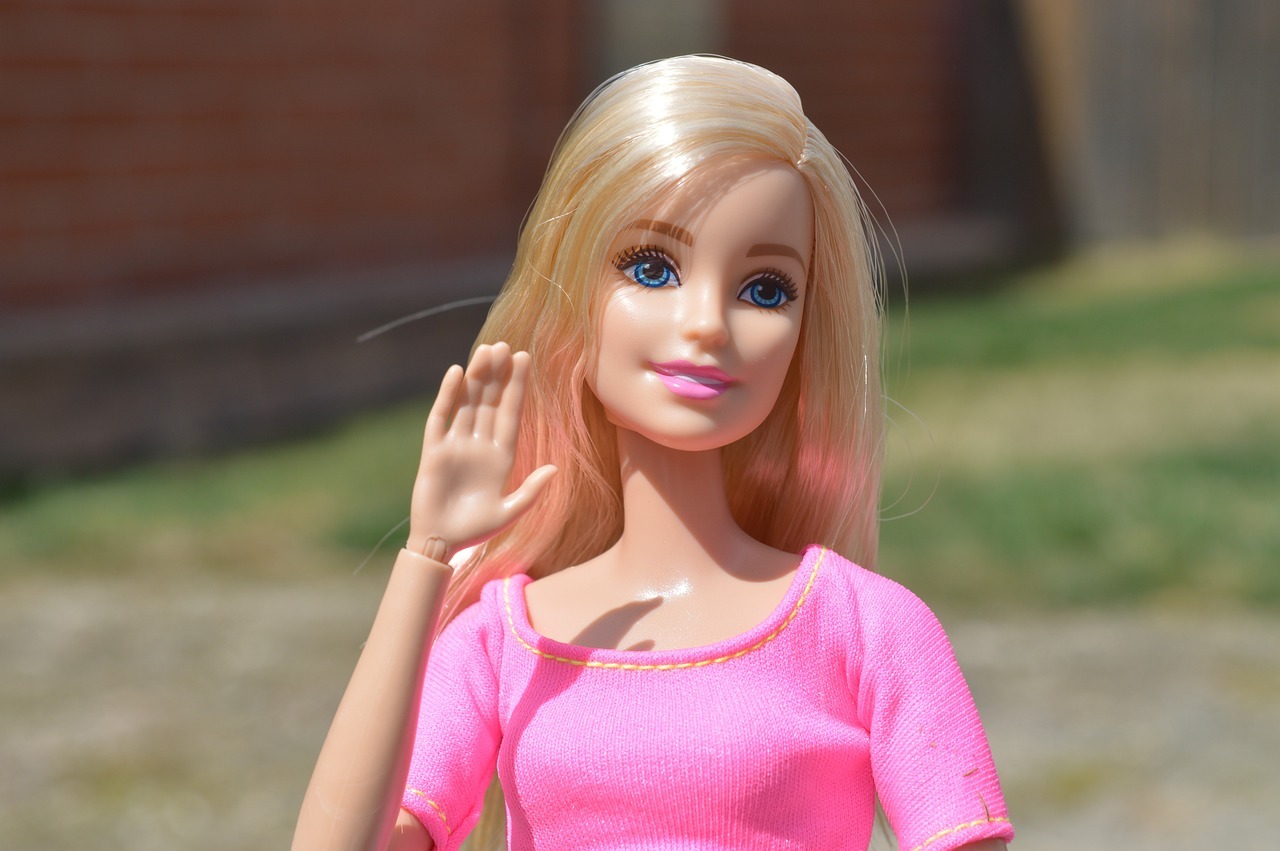

The Barbie doll is far more than a toy. She is a global personality who has inspired young girls for nearly 60 years. She symbolizes American aspiration alongside the endless prospects for women. Barbie keeps evolving to adapt to current trends and the ambitions of young girls. She serves as an ideal inspiration to girls all over, and she will undoubtedly continue to influence them over many years.
Barbie, who is the world’s most recognized doll, has gone through a fascinating transition over her decades of existence.
The rise of Barbie is a captivating voyage over the years, illustrating transforming beauty norms, modifications to culture, and women’s empowerment.
The Evolution of Barbie: From 1959 to Today

Barbie has surely come quite a long way in all of the years she has been available in stores and in the lives of girls throughout the globe.
Who Created Barbie?
On March 9, 1959, during the American International Toy Fair, the very first Barbie doll was presented to the world. Ruth Handler, a businesswoman, devised Barbie for her young daughter Barbara, whose nickname was Barbie. Handler preferred adult female dolls over the baby dolls marketed at the time for her young daughter to play with. The original Barbie was available in both brunette and blonde in her famous black and white knitted swimsuit.
The first few dolls, which cost $3, reflected the sophisticated looks of 1950s stars from Hollywood, including Elizabeth Taylor and Marilyn Monroe. Barbie’s immediate popularity was primarily attributed to the unique characteristics that she portrayed as an adult-bodied lady, in contrast to the majority of dolls at the time, which featured toddler depictions.
The Introduction of Ken: Barbie’s Iconic Companion

Ken made its debut in 1961. He was Barbie’s on-and-off boyfriend. Ken was named after Handler’s son Kenneth. Ken, like Barbie, made an appearance in a swimsuit but quickly established his own trendy line of apparel and accessories. And, like Barbie, but not quite as prolifically, he has a great resume, ranging from a barista to a financier.
Barbie Timeline (Quick Summary)
How Barbie looked every year over 60 years:
| 1959 | Barbie first appeared in 1959, modeling a striped black and white swimsuit, a blonde ponytail, and red lipstick. |
| 1960 | Barbie gets a new job! Barbie wearing a matching jacket and skirt combo with a blouse and sketchbook in 1960, depicting the fashion designer Barbie. |
| 1961 | Ken arrived as Barbie’s fictional companion. |
| 1962 | In 1962’s “Red Flare“, Barbie wears a puffy red overcoat and matching hat influenced by 1960s style diva Jackie Kennedy. |
| 1963 | “Midge” debuted as Barbie’s best pal. She was freckled, had a button nose, and had dark curly hair. |
| 1964 | Barbie’s characteristic bangs were substituted with a “swirl ponytail” hairstyle |
| 1965 | Barbie’s fringe and striped jumpsuit made a comeback |
| 1966 | “Colour Magic Barbie” had yellow hair and an item of brightly colored clothing. |
| 1967 | “Twist and Turn Barbie” had flexible knees and a twistable waist. |
| 1968 | “Talking Barbie” exclaimed, “Let’s go shopping!” |
| 1969 | “Christie” was the very first African American doll claimed as Barbie’s playmate. She made her professional debut in 1968. |
| 1970 | Cher Barbie was prime ’70s, outfitted in an altered version of the outfits she sported in the soundtrack clip for “Half Breed.” |
| 1971 | “Malibu Barbie” embodied the casual, West Coast atmosphere. |
| 1972 | The “Barbie Beauty Center” offered possibilities for wannabe stylists to practice on Barbie’s golden locks. |
| 1973 | “Malibu Christie” accompanied Barbie in California. |
| 1974 | Barbie’s Town House sported three levels and a contemporary layout. |
| 1975 | Barbie, the Olympic skier, premiered just before the 1976 Winter Olympics in Austria |
| 1976 | Barbie captured the spotlight as a dancer. |
| 1977 | Barbie was dressed like a “superstar” in a dazzling pink gown topped off by a sparkly boa. |
| 1978 | “Superstar” Barbie paired up with a marvelously ’70s Ken. |
| 1979 | Barbie and Ken are paired in monogrammed bathing suits. |
| 1980 | Teresa, the very first Hispanic doll included in the range, expanded the array of Barbie doll collections. |
| 1981 | Barbie began roller skating, replete with ’80s leg warmers. |
| 1982 | Barbie was portrayed as working at McDonald’s, serving burgers and fries |
| 1983 | Barbie’s townhouse gained a new design, with a sitting room, an eat-in cooking area, a family room, and a bedroom. |
| 1984 | Barbie donned a glittering dress like blossoms, accompanied by a dark-haired Ken. |
| 1985 | “Day To Night Barbie” was wearing clothes for a day at the office and a night out. |
| 1986 | Barbie was an astronaut who stepped on the moon |
| 1987 | Doctor Barbie appeared on duty with a white coat and a small stethoscope. |
| 1988 | “Fashion Barbie” wore ’80s fashion from top to bottom. |
| 1989 | “Evening Enchantment Barbie” donned a sparkling gown that complemented the night sky. |
| 1990 | A new Barbie house in shades of pink |
| 1991 | Barbie, an Air Force pilot, first appeared on retail shelves |
| 1992 | “Totally Hair Barbie” debuted with a hairstyle down to her ankles. |
| 1993 | “Native American Barbie” made her debut |
| 1994 | Barbie released “Kenyan Barbie” as a member of her “Dolls of the World” line. |
| 1995 | The holiday season, Barbie stepped out in a holly-adorned green and silver gown. |
| 1996 | Cinderella, the Festive Princess Barbie, was motivated by the character from Walt Disney’s 1950 animated film. |
| 1997 | Ken and Barbie made their theatrical debut as part of the Together Forever collection. |
| 1998 | Barbie’s Deluxe Dream House had floral decor with pink and green accents. |
| 1999 | “Generation Girl” Barbie donned a blue outfit and denim jacket with red wedges. |
| 2000 | Barbie dressed in a cropped top, pink skirt, and grey jacket as “Jewel Girl”. |
| 2001 | Barbie presented Olympian swimmers with gold medals following the Summer Olympics in Sydney, Australia. |
| 2002 | Barbie worked as an art instructor |
| 2003 | “Dolls of the World” debuted a Japanese princess Barbie. |
| 2004 | Barbie debuted as a “Presidential Candidate” in 2004, during an election year. |
| 2005 | Barbies from Destiny’s Child were all the vogue |
| 2006 | Barbie dressed up as a ballerina in ballerina flats and a pink tutu |
| 2007 | “Top Model Barbie” presented with her hands on hips. |
| 2008 | Barbie aired her personal cookery show. |
| 2009 | Barbie dressed up as a cowgirl, complete with a helmet and riding boots. |
| 2010 | Barbie learned programming and turned into a computer engineer. |
| 2011 | Barbie, the architect, developed her personal dreamhouse after occupying many different fantasy mansions. |
| 2012 | Barbie released commemorative dolls of Prince William and Kate Middleton. |
| 2013 | “Raquelle” appeared in the animated web series “Life in the Dreamhouse” as Barbie’s antagonist. |
| 2014 | “Barbie Entrepreneur” had huge concepts – and a small smartphone. |
| 2015 | Barbie from “Made To Move” displayed movable joints. |
| 2016 | Barbie launched “Curvy” shapes for bodies. |
| 2017 | Barbie’s first hijab-wearing doll was inspired by US Olympic fighter Ibtihaj Muhammad. |
| 2018 | The Barbies of Mindy Kaling, Oprah Winfrey, and Reese Witherspoon were inspired by their roles in “A Wrinkle in Time.” |
| 2019 | Barbie’s Fashionista collection consisted of six various body types, 9 skin tones, six eye hues, 11 hair colors, and ten hairstyles, as well as a black woman in a wheelchair. |
| 2020 | A doll with vitiligo, another with a prosthetic limb, and one lacking hair are among the new dolls in the 2020 Fashionista collection. |
| 2021 | Mattel introduced a collection of dolls commemorating frontline workers during the pandemic in 2021, including one modeled after Sarah Gilbert, an Oxford University professor of vaccinology who developed the AstraZeneca vaccine. |
| 2022 | Laverne Cox, the first transgender performer to be nominated for a Primetime Emmy Award, was the symbol of a Tribute Collection Barbie |
| 2023 | According to a Mattel news release, the new Barbie’s face is rounder, with eyes shaped like almonds, smaller ears, and a flat nasal bridge. Pink orthotics are also worn by the doll. |
| 2024 | Barbie continued expanding its inclusive Fashionistas line, introducing dolls with more diverse physical characteristics, adaptive accessories, and representation while building on the global success of the Barbie movie. |
| 2025 | Mattel further strengthened Barbie’s role as a symbol of diversity and empowerment, releasing new dolls inspired by real-world role models and continuing to celebrate women across sports, science, arts, and leadership. |
| 2026 | Barbie remains one of the world’s most influential toy brands, evolving with changing social values through inclusive designs, sustainability initiatives, and new collaborations that keep the iconic doll relevant for a new generation. |
| Today | Barbie’s evolution continues well beyond its 1959 debut. Today, the brand focuses on diversity, inclusion, sustainability, and empowering young minds, proving that Barbie is more than just a fashion doll. Barbie remains a cultural icon that evolves with every generation. |
The Impact of Barbie on Girls Around the World
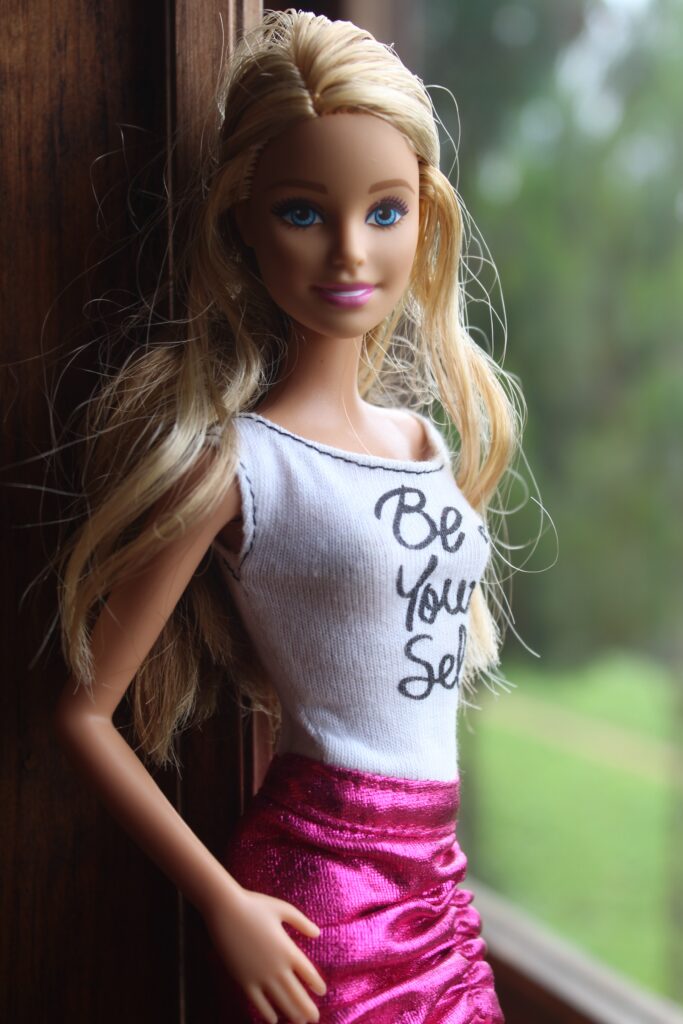
Barbie has motivated girls to envision big and chase their aspirations in a variety of ways. First and foremost, she has consistently been depicted as an influential and self-sufficient lady. She served as a fashion designer, a doctor, and an astronaut. This has proven to girls that they can be anyone they want to be.
Second, Barbie is typically shown as an optimistic and confident lady. She typically appears smiling and pleasant, and she never seems to be depressed. This demonstrates to females the importance of remaining confident and cheerful regardless of how difficult things are.
Third, Barbie has always been depicted as a fashionable and stylish woman. She was regularly dressed to impress, with the most recent outfits and accessories. This has taught girls the importance of maintaining their elegance and feeling good about themselves.
Mattel has developed Barbies with various body shapes, complexions, and hair colors. Their journey has also launched Barbies in an array of professions, from doctor to engineer to animal rescuer. This has shown girls that there’s no one way to look or be successful.
Barbie Career Evolution: Inspiring Generations to Dream Bigger

From designing clothes to exploring space, Barbie’s career journey mirrors the changing aspirations of women over the decades. Since her debut in 1959, Barbie has taken on more than 250 professions, encouraging girls to imagine a future without limits. Here’s a look at some of her most iconic careers and the milestones they represent.
| Year | Career | Why It Was Significant |
|---|---|---|
| 1960 | Fashion Designer | Barbie’s first career reflected her glamorous beginnings and introduced young girls to the world of fashion and creativity. |
| 1961 | Registered Nurse | One of her earliest professional roles, promoting compassion and careers in healthcare at a time when few dolls represented working women. |
| 1965 | Astronaut | Barbie reached for the stars four years before humans landed on the Moon, inspiring girls to dream beyond traditional expectations. |
| 1973 | Surgeon | At a time when female surgeons were rare, Barbie challenged stereotypes by stepping into the operating room. |
| 1985 | Business Executive | The iconic Day-to-Night Barbie symbolized the growing presence of women in corporate leadership during the 1980s. |
| 1986 | Rock Star | Capturing the vibrant spirit of the decade, Barbie embraced music, confidence, and self-expression. |
| 1989 | Military Officer | Barbie honored women serving their countries, proving courage comes in many forms. |
| 1992 | Presidential Candidate | Long before many countries seriously discussed women in top political offices, Barbie encouraged girls to imagine themselves leading a nation. |
| 1995 | Paleontologist | Equipped with fossils and curiosity, Barbie inspired interest in science, history, and exploration. |
| 2000 | Veterinarian | Caring for animals highlighted empathy and the importance of protecting wildlife and pets alike. |
| 2010 | News Anchor | Barbie stepped into journalism, reflecting the growing influence of women in media and broadcasting. |
| 2011 | Computer Engineer | Created to inspire girls to explore STEM fields, this Barbie became one of the brand’s most talked-about career dolls. |
| 2013 | Entrepreneur | Encouraging innovation and independence, Barbie celebrated women building businesses and pursuing their own ideas. |
| 2016 | Game Developer | As technology reshaped the world, Barbie embraced coding and video game design, inspiring future tech leaders. |
| 2019 | Judge | Barbie entered the courtroom, representing fairness, leadership, and women’s growing influence in the legal profession. |
| 2020 | Virologist | During a global health crisis, Barbie honored scientists and healthcare professionals working to protect communities worldwide. |
| 2021 | Environmentalist | Reflecting growing environmental awareness, Barbie promoted sustainability and caring for the planet. |
| 2022 | Robotics Engineer | Barbie continued encouraging girls to pursue careers in robotics, engineering, and artificial intelligence. |
| 2023–2026 | Global Role Models | Rather than focusing on a single profession, Mattel celebrated inspiring women from sports, science, business, arts, and activism, reinforcing Barbie’s message that every dream is worth pursuing. |
Barbie Movies Released Till Date
| 2002 | Barbie as Rapunzel |
| 2004 | Barbie in the Princess and the Pauper |
| 2005 | Barbie Fairytopia |
| 2006 | Barbie in a Mermaid Tale |
| 2007 | Barbie as the Island Princess, Barbie Fairytopia: Magic of the Rainbow |
| 2008 | Barbie Mariposa and Her Butterfly Fairy Friends, Barbie in A Christmas Carol |
| 2009 | Barbie and the Three Musketeers, Barbie Presents: Thumbelina |
| 2010 | Barbie: A Fashion Fairytale |
| 2011 | Barbie in the Nutcracker |
| 2012 | Barbie in a Mermaid Tale 2, Barbie in the Dreamhouse, Barbie in the Nutcracker 2 |
| 2013 | Barbie in the Pink ShoesBarbie in a Mermaid Tale 3 |
| 2015 | Barbie in Princess Power |
| 2016 | Barbie: Starlight AdventureBarbie Spy Squad |
| 2017 | Barbie: Video Game Hero |
| 2018 | Barbie Dreamhouse Adventures, Barbie and the Secret Door |
| 2020 | Barbie and the Magic of Pegasus |
| 2021 | Barbie and the Rock’n Royals |
Barbie Movie Released on July 2023
Barbie is a 2023 American fantasy comedy film directed and co-written by Greta Gerwig and Noah Baumbach. With its highly anticipated summer blockbuster, Warner Bros. Pictures brings Barbie to life. The cast of the Barbie film includes a variety of notable names, including Robbie as Barbie and Gosling as Ken. There are some standouts in the film’s massive cast, in which the women are all Barbies and the men are all Kens, with a couple of outliers.
Barbie Controversies: How the Iconic Barbie Doll Sparked Global Conversations
For more than six decades, Barbie has been admired as a symbol of creativity and ambition, but she has also been at the center of several cultural debates. As society evolved, so did expectations of what Barbie should represent. These controversies ultimately pushed Mattel to redesign and modernise the world’s most famous doll.
Unrealistic Beauty Standards
One of the most common criticisms of Barbie was her highly unrealistic body proportions. Critics argued that the doll’s tiny waist, long legs, and idealized features could create unhealthy beauty expectations for young children. Over the years, psychologists, parents, and educators questioned whether Barbie encouraged an unattainable image of perfection.
Gender Stereotypes
Early Barbie dolls were often associated with fashion, shopping, and beauty. Although Barbie held many careers, critics believed the brand still emphasized appearance over achievement. Mattel gradually shifted its messaging to highlight Barbie as a doctor, astronaut, engineer, scientist, entrepreneur, and leader, encouraging girls to imagine limitless possibilities.
Lack of Diversity
For many years, Barbie was criticized for limited representation of different races, ethnicities, and cultures. While dolls with diverse skin tones were introduced over time, many felt they didn’t fully reflect the diversity of the real world. In response, Mattel expanded the Fashionistas collection to include dolls with a wide range of skin tones, hairstyles, body types, disabilities, and adaptive accessories.
Body Inclusivity

In 2016, Mattel introduced Curvy, Tall, and Petite Barbie dolls, marking one of the brand’s most significant transformations. The move was widely praised for offering children dolls with different body shapes and promoting a more inclusive definition of beauty.
Representation of Disabilities
As conversations about accessibility grew, Barbie evolved once again. Mattel introduced dolls with wheelchairs, prosthetic limbs, hearing aids, and, later, a Barbie with Down syndrome. These additions were celebrated for helping children see themselves represented and encouraging empathy and inclusion through play.
Consumerism and Materialism

Barbie’s dream house, luxury cars, designer outfits, and endless accessories have sometimes been criticized for promoting consumerism and an idealised lifestyle. Supporters, however, argue that imaginative play, not material possessions, is what has kept Barbie doll relevant across generations.
The Barbie Movie Debate
The release of the 2023 Barbie movie reignited discussions about feminism, gender roles, and modern society. While many praised the film for its humor and thoughtful social commentary, others debated its portrayal of gender expectations and cultural stereotypes. The conversation demonstrated that Barbie had evolved from a children’s toy into a global cultural icon capable of inspiring meaningful dialogue.
From Criticism to Change
Rather than ignoring criticism, Mattel has often used public feedback to reshape Barbie. Today’s dolls celebrate diversity, accessibility, and empowerment, reflecting a broader vision of beauty and success. Barbie’s journey shows how an iconic toy can evolve alongside society, transforming criticism into opportunities for positive change.
Concluding Words
Who would have thought a doll introduced in 1959 would still be making headlines today? From breaking career stereotypes to embracing diversity and inspiring big dreams, Barbie has come a long way. She hasn’t been perfect, but that’s exactly what makes her story so interesting. Love her or criticize her, one thing’s for sure – Barbie continues to evolve with every generation, reminding us that it’s never too late to reinvent yourself and dream a little bigger.