

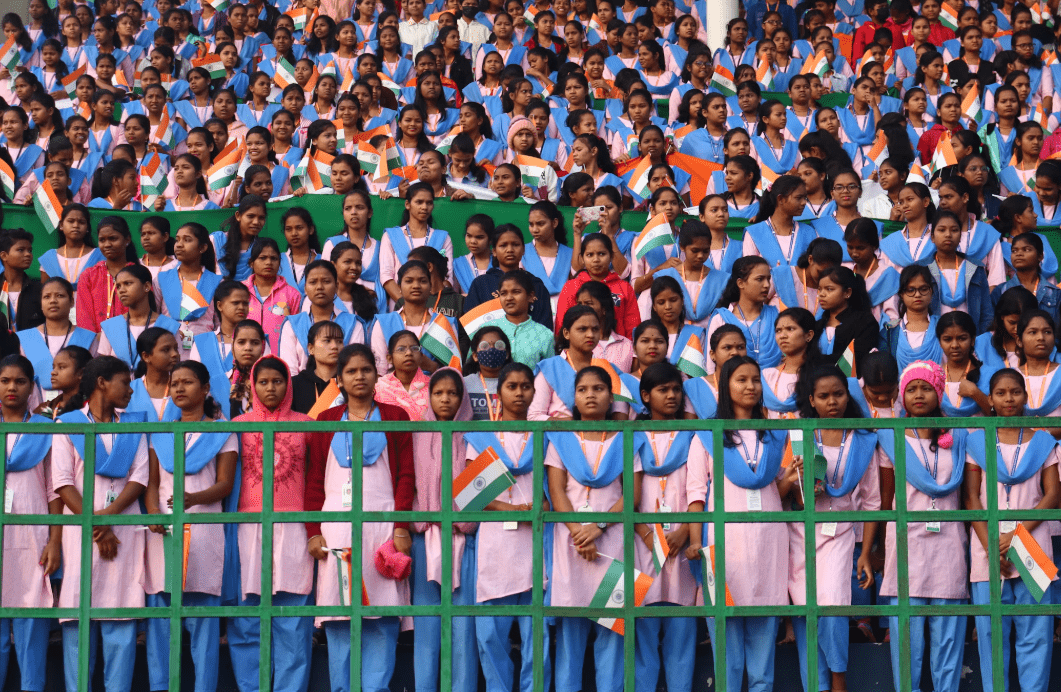

Every year on 15 August, India wakes up with the flag colours all around. You see flags on balconies, kids in school uniforms walking in school corridors, and you hear patriotic songs playing from loudspeakers. And then you look at the media; it is all about the Indian flag colours. Saffron, white and green. We always hear about people looking at the same old pictures and listening to speeches about what people gave up for India to be free. For many of us, Independence Day is like a festival that happens every year. We rarely ask what it was like for people who were alive on that first Independence Day.
Was everyone happy and celebrating? Were the streets only filled with people? Did people wake up on 15 August 1947? Think that everything was going to be okay now? The truth is it was not that simple. India got its Independence. It also came with a lot of fear, people getting separated and a lot of uncertainty. Some people were happy and celebrating under the Indian flag while others were leaving their homes never to see them again.
Some people were listening to speeches about India while others were desperately looking for their family members who were missing. So the story of Independence Day is not just about India becoming a country. It is about what ordinary people like you and me went through, the tough choices they had to make, their courage and the sacrifices they made for India to be free and for a future that nobody knew what it would be like.
Before the Flag, There Was a Struggle
To understand why 15 August is so important, we need to go back in time when the Indian flag was not flying high over government buildings and the thought of India being independent was still a dream that seemed very far away. The British started to have more influence in India over time. The East India Company came to India to do business. As time passed, they started to have more power over the country and its people. More and more parts of India came under control, and decisions that affected millions of people were made by people from another country. There were always some people who resisted.
One of the biggest challenges to the British came in 1857. What started as a revolt by soldiers soon turned into a big uprising in many parts of the country. People like Rani Lakshmibai, Bahadur Shah Zafar, Nana Sahib and Tantia Tope became known for fighting against the British. The British were able to stop the uprising. It changed the way the country was run.
The British government took control of India from the East India Company, and people still remembered the revolt. This was not the independence movement that we know today, but it showed one thing: the British could be challenged. The Indian independence movement was still a way off, but 15 August and the Indian tricolour were connected to the idea of India being free from the British. The tricolour and 15 August matter because they remind us of the long and difficult journey to independence.
Then the Dream Started Getting a Name
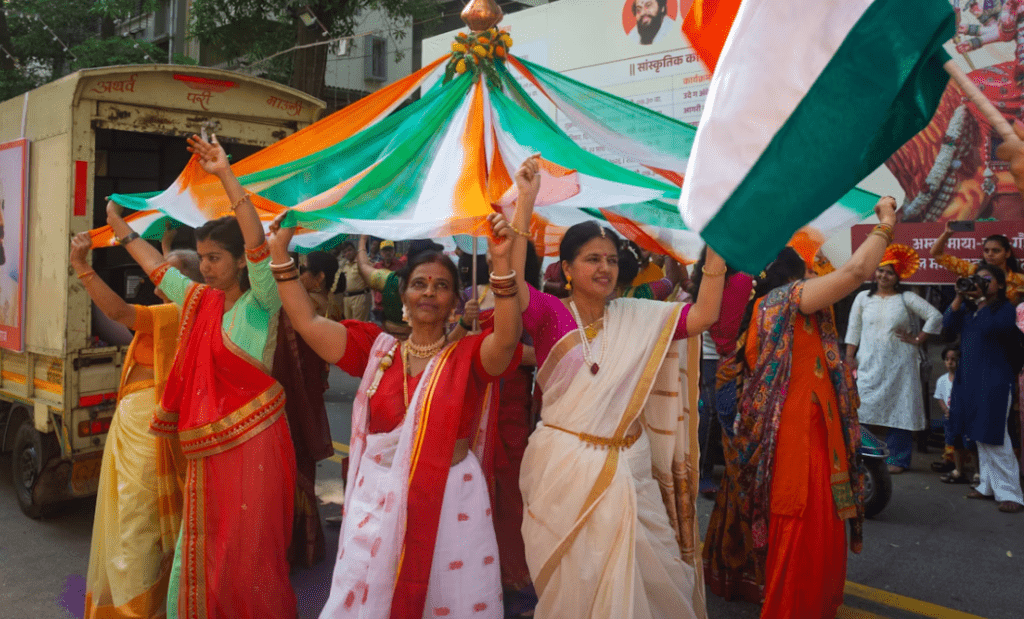
By the end of the century and the start of the twentieth century, Indian people started thinking more about politics. The Indian National Congress was formed in 1885. At first, the group wanted more Indians to be involved in running the country and to have political changes. As time went on, the demands grew stronger. The question changed from “Can Indians have a say?” to something much bigger: “Why should someone else decide everything about India?” Newspapers helped share ideas.
Public meetings happened often. New leaders came forward. There was never a full agreement on how to get freedom. Some leaders thought that working within the rules and making changes was the way to go. Others wanted protests. Some thought that taking action was needed. The movement for independence was not a machine moving in one direction. It was messy, full of feelings and full of arguments. That is what makes it real. Different people had ideas about freedom, but the idea that India should be able to decide its own future became harder and harder to stop.
A Lawyer Walked Back Into India
In the year 1915, a lawyer named Mohandas Karamchand Gandhi came back to India after spending a lot of time in South Africa. Mohandas Karamchand Gandhi was his name. Mohandas Karamchand Gandhi did not start the movement to free India. He definitely did not do it by himself. When Mohandas Karamchand Gandhi arrived, it changed the whole movement.
His ideas, like satyagraha not fighting back and not following rules gave regular people a way to be part of the movement to make India free. The movement to make India free slowly started to reach people; it went from just meetings with important people to villages, markets, schools and homes.
Farmers, workers, students and women started joining campaigns that said no to the government.
The idea was powerful because it made people feel like they were part of something. You did not have to be a politician to say no to the British. You could say no to buying things from countries. You could join a protest. You could say no to doing things that you thought were not fair. You could make a choice every day that became part of a big movement to free India.
The Revolution That Began With Salt
India’s independence story takes a surprising turn here. A famous protest against the British started with something we do not think about much today: salt. In 1930, Gandhi protested against the salt laws because everyone needs salt no matter how much money they have or what their social status is. On March 12, Gandhi left Sabarmati Ashram with 78 people. Started walking to Dandi. The Gandhi Heritage Portal talks about the march. Says that Gandhi broke the salt law at Dandi on April 6, 1930. It seems easy to be a big deal. That was the smart thing about it. Salt is something we use every day. It is necessary.
Everyone knows what salt is. By using salt as a symbol of saying no to the British, Gandhi connected a fight for freedom with daily life.Thousands of people got involved in the movement of not following the law. The march showed that a protest does not always have to be a fight. Sometimes it can start with something like picking up a little salt. The salt protest was a part of India’s independence story, and it was led by Gandhi. Gandhi and the people who walked with him to Dandi were fighting against the salt laws, and they were fighting for India’s freedom. The march to Dandi was an event in India’s history, and it was all about salt.
But Gandhi Was Never the Whole Story
The story of India’s independence is not complete if we only talk about Gandhi. There were people in the freedom movement who did not agree with each other on how to do things, what politics to follow and what kind of country India should be. Bhagat Singh is an example of someone who fought against the government in a bold way and became a hero to many young people. Subhas Chandra Bose had a different idea and wanted to fight the British with the Indian National Army. Sarojini Naidu was a good leader and speaker. Aruna Asaf Ali was a person in the Quit India Movement.
There were also many other people who are not well known. Students would secretly give out papers with ideas. Workers would go on strike. Farmers would join in protests. Women would take part in protests even though it was not easy for them to do so. Journalists would risk going to jail to print ideas that went against the government. The Government of India has records that show many people took part in the Quit India Movement, including farmers, workers, students, journalists, artists and many others.
One thing we should always remember is that India did not become independent because of a few famous people. India’s independence was built by the population, with many people working together. The Quit India Movement was a part of this, with people from all walks of life taking part, including farmers, workers, students and journalists. India’s independence is a story of people, not just a few leaders.
1942: When the Demand Became Impossible to Ignore
The world was at war by 1942, with the Second World War going on, and Britain was feeling a lot of pressure. In India, people were really frustrated with being ruled by Britain. This feeling had become very strong. The Quit India Movement started in August 1942 when people directly asked the British to leave India.
Gandhi said “Do or Die,” which became a part of the movement. Where did the words “Quit India” come from? The phrase “Quit India” was actually thought of by Yusuf Meherally, a person who fought for India’s freedom. When the movement started, the British arrested important leaders and tried to stop the protests. People did not give up. Students, workers, farmers and people from communities all did their part. Women also did things.
For example, Matangini Hazra showed courage when she was shot during a procession, but she still held the national flag.
Her story reminds us that we often remember history by the names of people, but the real power of a movement comes from the thousands of people who are not famous, like the people in the Quit India Movement.
The Date Wasn’t Always Going to Be 15 August
Now comes a surprising turn in the story of India’s independence. The British did not plan to leave India on 15 August 1947 at first. The British government said they would give India its power by June 1948. Things were changing very fast in India, and Lord Louis Mountbatten, the last Viceroy of British India, decided to speed things up.
He moved the date of independence to August 1947. The UK’s National Archives have a record of this change in the schedule for transferring power to India. Just think about how people felt when they heard this news. These people had waited for decades to be free. India’s independence was no longer a dream that might happen someday.
It was really going to happen in a few months. As the day of independence got closer, things started to get more complicated. India’s independence was becoming more and more difficult. India’s path to independence was not easy; British India was becoming India.
Freedom Arrived With a Border
India’s independence and Partition are really connected. The British divided India into two parts, India and Pakistan. They drew borders where people had lived together for a very long time. This meant that millions of people had to make tough decisions. They had to think about whether they should stay or leave. Where would they go if they left? Would their neighbours still be their friends? Would their homes be safe? People packed up the things they could carry, like jewellery and important papers.
Some people took pictures with them. Some people took food. Some people only took their kids and nothing else. A lot of people. Sadly, many people got hurt because of fights between different groups. This is a part of India’s Independence Day to talk about, but it is really important. For one person, this time meant freedom. For another person, it meant losing their home. India got its independence. When the new country was born, it was also a time when many people had to leave their homes and move to a new place, and this was very sad and traumatic.
Midnight Was Not the Same for Everyone
On the night of 14 August 1947, the Constituent Assembly gathered in Delhi. As midnight approached, India stood on the edge of a moment that generations had dreamed about. Jawaharlal Nehru delivered his famous “Tryst with Destiny” speech, speaking about India’s long journey and the responsibility that came with freedom.
The Nehru Portal preserves the speech and records the significance of the moment. But while the assembly hall witnessed a historic political transition, millions of ordinary Indians were experiencing the same night differently. Some were celebrating. Some were listening to radios with their families. Some were standing in streets filled with excitement. Somewhere else, people were packing bags to cross a newly created border. Somewhere, someone was grieving. Somewhere, someone was searching for a missing relative. That is what makes the night so difficult to describe with a single emotion. India was free, but India was also wounded.
The Freedom Fighter Who Wasn’t Celebrating
One thing that makes this moment really stand out is that Mahatma Gandhi was not in Delhi when India became independent. Mahatma Gandhi had spent a lot of years fighting for India’s independence. Mahatma Gandhi was in Bengal at that time. There was a lot of violence between communities in Bengal, and people were really scared and suffering. While other leaders were getting ready for the independence celebrations, Mahatma Gandhi was trying to bring peace. This is a contrast.
India was finally free from rule, but Mahatma Gandhi knew that India could not be a happy country if people were fighting and hating each other. Mahatma Gandhi was reminding everyone that becoming independent was not the end of the struggle for India. Just because the British were leaving India, it did not mean that everything was okay. Building a country where people could live in peace and be treated fairly would take a lot of work and a different kind of struggle, for Mahatma Gandhi and the people of India.
The Morning India Woke Up Free
When the sun came up on 15 August 1947, India was finally in charge of its future. Being free did not instantly get rid of poverty, people moving from their homes, fighting or unfair treatment. The new government had a job to do. Millions of people who had left their homes needed help. Buildings and groups had to be made and made stronger. The money side of the country needed to be fixed. A system where everyone could vote had to be created in a place with many different people.
India finally created its Constitution, which started working on 26 January 1950, showing the start of a Republic. Changing from being ruled by another country to a government that follows a written plan was a success. It was another part of the country’s effort to make freedom into a working society. Freedom had given the chance. People in India now had to decide what to do next.
The Freedom We Take for Granted
For someone who was born years after the country gained independence, freedom can seem like something that is not really noticed because it is just a part of daily life. We get up each day. Decide what to learn. We pick the jobs we want. We move from one city to another. We say what we think. We start companies, make movies, songs and works of art. We cast our vote when we are old enough. We talk about things that the government does. We discuss politics.
We imagine jobs and lives that people in 1947 could not have imagined. We are surrounded by options that older people had to struggle to make possible. Freedom is not only about having options. It is also about knowing the duty that goes with them. We are allowed to talk. Our words can influence others. We are allowed to disagree. Being different does not mean being mean. We are allowed to be who we are. We should not use who we are to stop someone else from being who they are. We are allowed to imagine. We should also think about whether other people have the chance to imagine too.
Maybe Patriotism Is More Ordinary Than We Think
We usually think of patriotism as something exciting: a soldier standing at the border, a flag flying high in the air, a lot of people singing a song about their country or a person giving a powerful talk on a stage.
Patriotism can also be very quiet and simple. For example, patriotism can be a teacher who helps a student when they are struggling and think they are not good enough. It can be a person who does not throw trash on the ground. It can be someone who chooses to be honest when they know they can get away with cheating. It can be a person who helps someone from a community without caring about their language or where they are from. It can be a person who uses what they learn in school to do something that really matters.
These things do not usually get a lot of attention or applause. A country is made strong by the millions of small choices that people make every day. The people who fought for India’s independence gave us a chance to make something of ourselves. What we do with that chance is what we add to the story of India.
The Freedom Fighters We Never Learned About
There is another reason to look beyond the names on Independence Day. History tends to remember individuals because stories need faces. Movements are made by crowds. For every leader whose photograph appears in textbooks, there were countless people whose names disappeared from public memory. There were students who distributed pamphlets, women who sheltered activists, workers who joined strikes, villagers who resisted policies and families who endured imprisonment or loss.
Their stories may not have become symbols, but they mattered. The Government of India has highlighted the contributions of unsung heroes” of the freedom movement, reminding us that India’s independence belongs to far more people than the names we memorize for examinations. Remembering them is not simply about adding names to a history lesson. It is about understanding how change actually happens.
So What Are We Doing With Our Freedom?
When the celebrations are over, we should think about what it means to be Indian. Posting a picture of the flag is simple. Sharing a quote about patriotism is simple. Saying we are proud to be Indian is simple. What do we do on August 17 and the days after that? Do we behave like citizens of India? Do we respect people who speak languages and have different opinions than we do? Do we speak out against things that’re not fair? Do we really care about getting an education, being treated equally and having the same opportunities as everyone else in India?
Do we use media in a good way, or do we just share things that make us angry? Do we take care of the earth and all the things in it? Do we help people in India who’re not as lucky as we are? These are questions to think about. They do not make Independence Day any less special. They make it more special and meaningful. India is not strong just because we celebrate our history. India is strong because of the citizens who care about its future and want to make it a better place for everyone in India.
The Story Didn’t End in 1947
When we think about Independence Day, we often think it is the end of the story. It is really the start of a new one. The people who fought for India’s freedom did not know what the country would be like in the future. They did not know about things like smartphones, artificial intelligence and social media. They did not know what problems we would face. All they could do was fight for the right of people like us to decide our future. We are the people who got to benefit from their work. We got the freedom they fought for. We also got the job of keeping it safe.
So on 15 August, when the flag goes up and we start singing the songs, take a moment to think before you grab your phone to take a picture. Look at the flag. Remember what it really means. It is not about a date in history. It is about the people who were brave, the people who went to jail, the people who stood up to an empire, the people who lost their homes and the people who we remember and do not remember. Remember that a lot of people celebrated when India became independent, but a lot of people also suffered. Remember that freedom was not the end goal. It was a chance to make things better.
Then ask yourself a question. If the people who fought for India’s independence could see the country now, what would make them happy? What would they want us to change? We will never know what they would say. Maybe we can spend our lives trying to make them proud. India became independent on 15 August 1947. What we do with that freedom is still being written. We are still writing the story of what India will be like. The people who fought for India’s freedom gave us a gift. Now it is up to us to make sure that gift is worth giving.